When purchasing a property in Melbourne, many buyers focus on structural cracks, roof defects and moisture problems. However, timber pest damage is another important concern that should not be overlooked.
Termites and timber borers can damage structural timber components, sometimes without obvious signs being visible during a general property viewing.
At Ausgun Building Inspections, we provide timber pest inspections across Melbourne and regional Victoria to help property buyers and owners identify visible evidence of timber pest activity, damage and conditions conducive to attack.
Understanding the warning signs of timber pests can help buyers make informed decisions before purchasing a property.
1. What Is a Timber Pest Inspection?
A timber pest inspection is a professional assessment of accessible building areas for evidence of timber pest activity and damage.
In Australia, pre-purchase timber pest inspections are commonly carried out with reference to AS 4349.3 – Inspection of Buildings: Timber Pest Inspections.
The inspection generally focuses on:
- Evidence of termite activity
- Termite damage to timber
- Timber borer activity and damage
- Fungal decay affecting timber
- Conditions conducive to timber pest attack
- Accessible structural timber components
A timber pest inspection is generally visual and non-invasive. Concealed infestations or damage may not be detected.
2. Why Are Termites a Concern for Melbourne Homes?
Termites feed on cellulose materials, including timber used in residential construction.
Depending on the species and conditions, termites can damage structural components such as:
- Timber floor joists
- Bearers
- Wall framing
- Roof timbers
- Timber stumps
- Other accessible timber elements
Termites can sometimes cause substantial damage before obvious signs appear.
Properties with moisture problems, timber in contact with soil or inadequate inspection access may be particularly vulnerable.
A professional inspection can help identify visible warning signs and conditions that increase the risk of termite activity.
3. Common Signs of Termite Activity
Termite activity may be difficult to identify without experience.
Some warning signs include:
Mud tubes: Certain subterranean termites construct mud tubes to travel between the soil and timber.
Damaged timber: Timber may contain concealed galleries or areas of deterioration.
Hollow-sounding timber: Damaged timber may sound hollow when tapped, although this is not a reliable diagnostic test on its own.
Discarded wings: Swarming termites may leave wings near windows or other areas.
Unusual timber deterioration: Damage that appears inconsistent with ordinary wear may require further investigation.
Not all timber damage is caused by termites. A qualified timber pest inspector should assess suspicious findings.
4. What Are Timber Borers?
Timber borers are insects whose larvae can damage timber by creating tunnels as they develop.
Evidence of borer activity may include:
- Small holes in timber surfaces
- Fine timber dust or frass
- Internal timber galleries
- Deteriorated structural timbers
The significance of borer damage depends on the insect species, whether activity is ongoing and the extent of timber deterioration.
Not every borer exit hole indicates an active infestation.
However, significant damage to structural timber should be investigated.
5. Can Timber Pests Damage Roof Framing?
Yes. Timber pests can affect roof framing where suitable conditions exist.
During inspections, damage may be identified in accessible roof timbers, including:
- Rafters
- Roof trusses
- Underpurlins
- Ceiling joists
- Other structural timber members
Where significant timber damage is identified, further assessment may be required to determine whether the structural performance of the roof has been affected.
Repairs may involve strengthening or replacing damaged components under appropriate professional guidance.
6. Timber Pest Damage in Subfloors
Subfloors are important areas during timber pest inspections because they may contain exposed timber components and moisture-related conditions.
Common concerns include:
- Damaged floor joists
- Deteriorated bearers
- Rotten timber stumps
- Excessive subfloor moisture
- Poor ventilation
- Timber debris on the ground
- Timber in contact with soil
Moisture and timber debris can create conditions conducive to termite activity.
Recommendation: Address drainage and moisture problems, remove unnecessary timber debris and maintain appropriate access for future inspections.
7. Does Moisture Increase the Risk of Termites?
Moisture is an important factor in many termite infestations.
Common moisture-related issues include:
- Leaking showers
- Plumbing leaks
- Blocked gutters
- Disconnected downpipes
- Poor surface drainage
- Damp subfloors
- Water penetration around windows
Persistent moisture can create favourable conditions for timber decay and certain timber pests.
However, a property can still be affected by termites even when obvious moisture problems are absent.
Regular inspection and maintenance remain important.
8. Is a Building Inspection the Same as a Timber Pest Inspection?
No.
A standard pre-purchase building inspection focuses on the visible condition of the building, including structural defects, moisture damage and general deterioration.
A dedicated timber pest inspection focuses specifically on timber pest activity, damage and conducive conditions.
Although a building inspector may identify visible timber damage, a standard building inspection does not replace a timber pest inspection.
For buyers seeking a broader assessment, a combined building and pest inspection is recommended.
9. Can a Timber Pest Inspection Find Every Termite Infestation?
No inspection can guarantee that a property is completely free from termites or other timber pests.
Inspections are generally visual and non-invasive.
Limitations may include:
- Concealed wall framing
- Inaccessible roof voids
- Restricted subfloor areas
- Timber hidden behind finishes
- Stored belongings
- Areas covered by insulation
- Concealed termite activity
A professional report should identify relevant access limitations and recommend further investigation where necessary.
10. What Happens If Termite Damage Is Found?
If evidence of termite activity or damage is identified, the next steps depend on the findings.
Recommended actions may include:
- Engage a qualified pest management professional.
- Determine whether termite activity is ongoing.
- Arrange appropriate termite management or treatment.
- Assess the extent of timber damage.
- Obtain structural advice where significant damage is present.
- Arrange necessary timber repairs.
Treatment and structural repairs are separate matters.
Eliminating active termites does not restore the strength of damaged timber components.
11. Should You Buy a House With Termite Damage?
A property with termite damage is not automatically unsuitable for purchase.
However, buyers should understand the extent of the damage and potential repair costs before proceeding.
Important considerations include:
- Whether termite activity is current or historical
- The extent of structural timber damage
- Previous termite treatment records
- The condition of the subfloor and roof framing
- Potential concealed damage
- Future termite management requirements
Where significant concerns are identified, buyers should obtain specialist assessments and repair quotations.
The findings may also be relevant when discussing the property purchase with a conveyancer or legal representative.
12. How Often Should a Property Have a Timber Pest Inspection?
Regular timber pest inspections are an important part of property maintenance.
For many Australian homes, an inspection at least every 12 months is commonly recommended, although properties with higher risks may require more frequent inspections.
Inspection frequency should be determined according to the property’s construction, location, history and timber pest risk.
Regular inspections do not prevent termite activity, but they may help identify problems earlier.
13. How Can Homeowners Reduce Timber Pest Risks?
Property owners can take practical steps to reduce conditions conducive to timber pest activity.
These include:
- Repair leaking plumbing
- Keep gutters and downpipes clear
- Improve drainage around the property
- Remove unnecessary timber debris
- Avoid storing timber directly against the building
- Maintain suitable subfloor ventilation
- Avoid concealing inspection zones
- Arrange regular timber pest inspections
Where a termite management system is installed, follow the manufacturer’s and pest management professional’s maintenance recommendations.
14. Why Is a Timber Pest Inspection Important Before Buying?
Purchasing a property without a timber pest inspection may expose buyers to unexpected repair and treatment costs.
A professional inspection can provide valuable information about visible timber pest activity, damage and risk conditions.
For older properties with timber subfloors or a history of moisture problems, timber pest assessment can be particularly important.
Combining building and timber pest inspections allows buyers to obtain a broader understanding of the property’s condition.
Why Choose Ausgun Building Inspections?
Ausgun Building Inspections provides professional building and timber pest inspection services across Melbourne and regional Victoria.
Our team assesses accessible building areas for visible defects, timber deterioration and evidence of timber pest activity.
Our services include:
- Timber Pest Inspections
- Combined Building and Pest Inspections
- Pre-Purchase Building Inspections
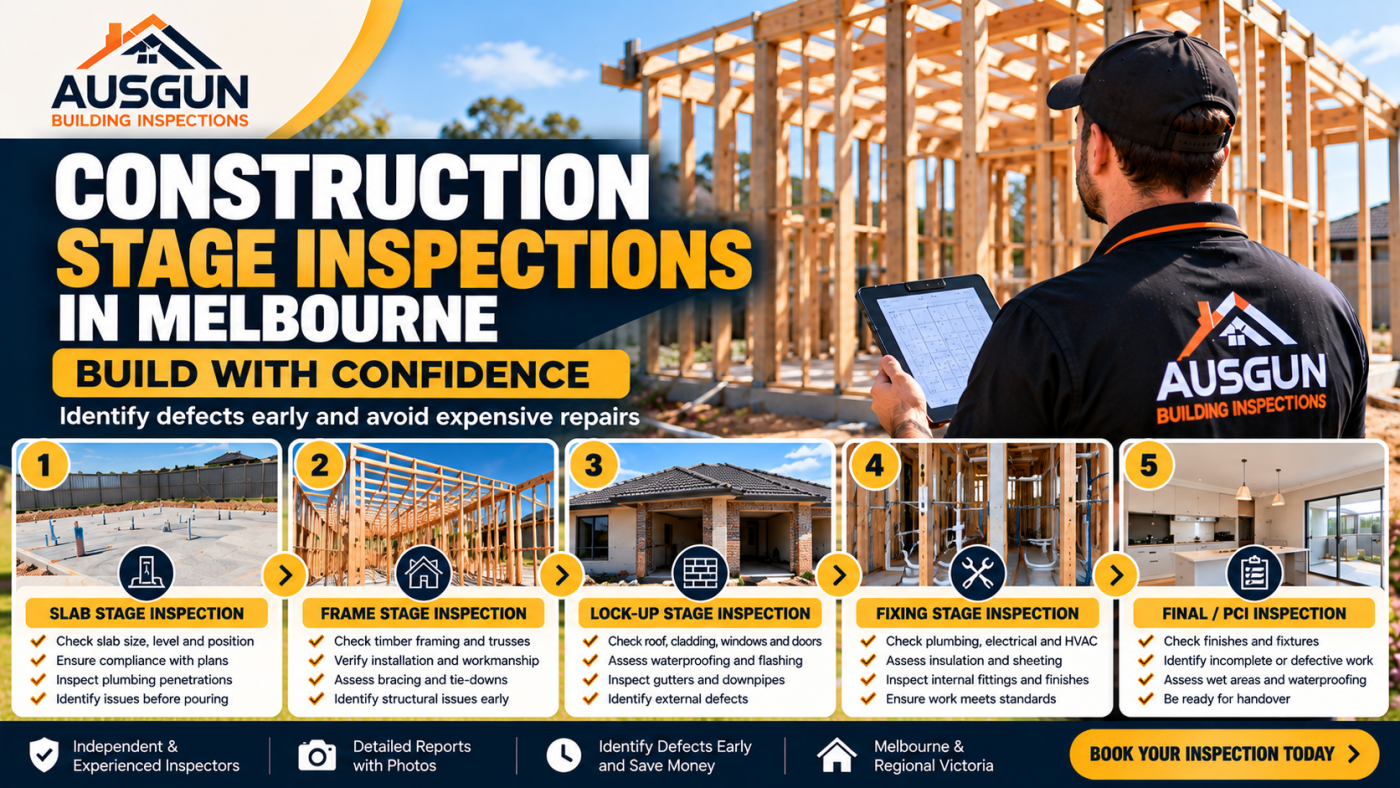
- Construction Stage Inspections
- Practical Completion Inspections
- Section 137B Owner Builder Reports
- Rental Minimum Standards Inspections
Our aim is to provide clear inspection reports and practical recommendations to help property buyers make informed decisions.
Book Your Timber Pest Inspection in Melbourne
Are you purchasing a property or concerned about possible termite or timber borer damage?
A professional timber pest inspection can help identify visible evidence of timber pest activity and damage before problems become more serious.
Don’t Buy Before You Inspect!
Contact Ausgun Building Inspections today to arrange your timber pest or combined building and pest inspection.
Website: https://ausgunbuildinginspections.com.au/
Your Property, Our Priority.