
The kitchen looked well cared for. Cabinets were clean, the benchtops had been recently refreshed, and there was no obvious staining on the ceiling below. Yet this Dandenong home inspection case study shows why a tidy presentation should never be confused with a sound building.
The following is a representative inspection scenario based on recurring defect patterns found in established homes across Melbourne’s southeast. Identifying details have been removed, but the inspection process and the risks are real. A buyer was considering a brick veneer family home that appeared to need only cosmetic updates. Before committing, they arranged an independent pre-purchase building and pest inspection.
What the inspection uncovered was not a single dramatic failure. It was a chain of smaller defects: failed sealant, poor drainage, elevated moisture, and concealed timber deterioration. Left unresolved, those issues could have developed into a far more expensive repair after closing.
Dandenong Home Inspection Case Study: What Looked Fine
The property was an older single-story residence with an extension at the rear. From the street, it presented well. The roofline looked reasonably straight, the garden was maintained, and internal rooms had been repainted. For a buyer moving quickly in a competitive market, it would have been easy to focus on the layout and assume the house was fundamentally sound.
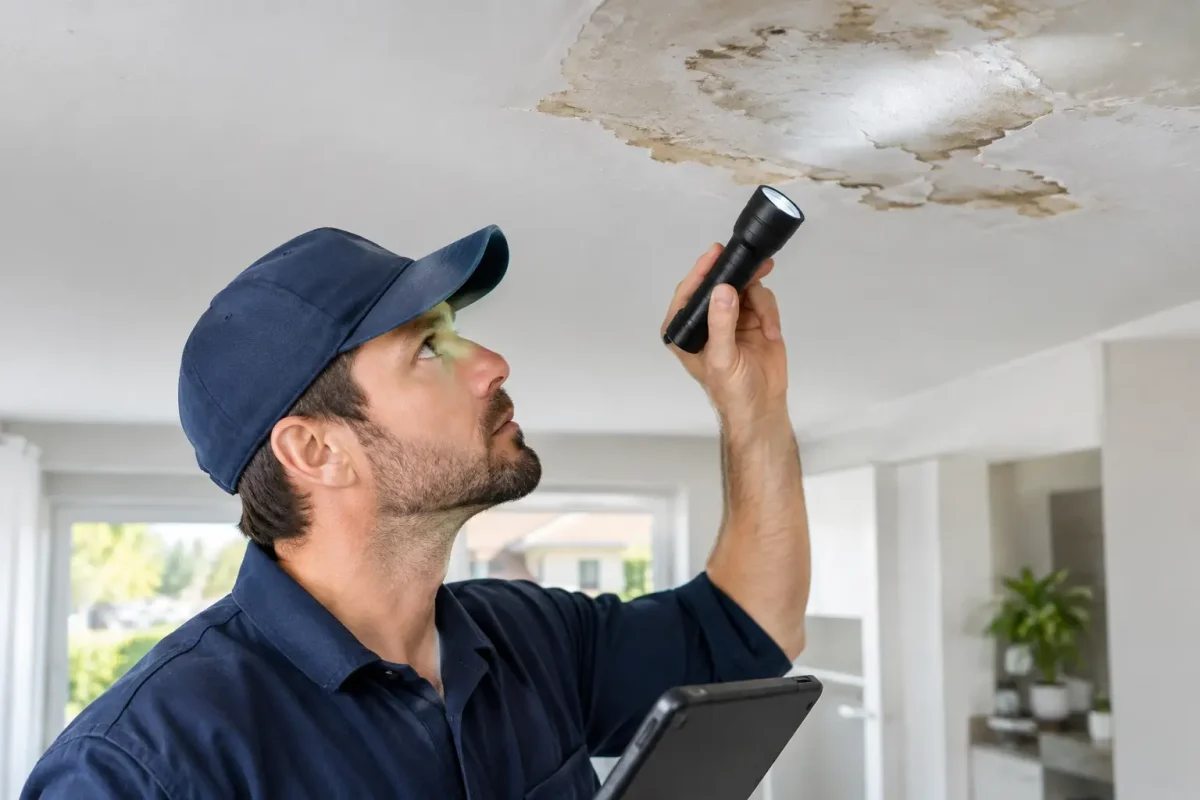
The inspection began with the areas buyers often see: walls, ceilings, floors, doors, windows, wet areas, exterior cladding, site drainage, roof space where accessible, and subfloor areas where safe access was available. The purpose was not to make a cosmetic checklist. It was to identify defects, safety concerns, moisture pathways, pest indicators, and building movement that could affect the buyer’s decision or future repair budget.
There were no major cracks visible across the front facade. Internal floors did not feel dramatically uneven underfoot. But several subtle signs justified closer investigation: a slightly swollen kickboard beneath the kitchen sink, fine separation around a rear window frame, and a musty odor in the cabinet under the adjoining laundry basin.
None of those signs proves a major defect on its own. Together, they told the inspector where to test next.
The Inspection Process Behind the Findings
A professional inspection combines visual experience with diagnostic equipment. Tools do not replace judgment, but they help confirm conditions that a visual check alone cannot establish without removing finishes.
Moisture readings revealed an active concern
A moisture meter was used on accessible wall linings and cabinetry around the kitchen and laundry. Readings were elevated near the shared plumbing wall and along the lower section of the rear external wall. The visible finish was largely intact, which is exactly why moisture testing mattered.
High readings do not automatically identify the source. Moisture may come from a plumbing leak, failed waterproofing, overflowing gutters, poor ground drainage, or condensation. In this case, the pattern of readings was strongest at the base of the wall and extended toward the rear corner of the home. That pointed away from a simple isolated sink leak.
Thermal imaging narrowed the search
Thermal imaging was then used as a non-invasive screening tool. A cooler irregular pattern appeared behind the wall lining near the laundry and continued toward the external corner. Thermal imaging cannot see through walls or confirm every leak by itself. Temperature differences can also be affected by sun exposure, insulation gaps, and air movement.
Used alongside moisture readings and visual evidence, however, it gave the buyer a much clearer picture: water was likely entering or remaining within the wall and floor junction. Further investigation and repair were required before the cause could be confirmed and the affected materials assessed.
Drainage explained part of the problem
Outside, the rear paving had been installed close to the brickwork and sloped toward the house in sections. A downpipe discharged near the affected corner, and surface water had limited opportunity to move away from the building during heavy rain.
This did not prove that drainage was the only source of moisture. It did establish a clear defect that increased the risk of water entry. Water management is one of the most overlooked parts of a home inspection. A property can have an attractive yard while still directing rainfall toward walls, footings, and subfloor areas.
What Was Hidden Below the Surface
Further accessible inspection identified localized timber deterioration at the lower framing area near the rear addition. The extent could not be fully determined without invasive work, which is outside the scope of a standard pre-purchase inspection. Still, the evidence was sufficient to classify the issue as requiring prompt investigation by an appropriately qualified contractor.
The inspection also found conditions conducive to timber pest activity. There were no confirmed active termites at the time of the inspection, but elevated moisture, timber close to soil, and limited clearance around the rear section created an avoidable risk. A pest inspection is not simply about finding insects on the day. It also considers the conditions that make future infestation more likely.
This distinction matters to buyers. “No active termites found” is reassuring, but it is not the same as “no termite risk exists.” A careful report explains both the observation and the limitations, without exaggerating either.
Why the Buyer’s Decision Changed
The report included photographs, moisture results, clear defect descriptions, and practical recommendations. The buyer could see that the concern was not based on vague language or a cosmetic preference. There was evidence of elevated moisture, drainage defects, possible concealed damage, and timber pest risk factors.
That evidence gave the buyer options. Depending on the contract conditions and timing, a purchaser may seek further specialist assessment, request repair documentation, negotiate the price to account for likely rectification costs, or walk away from the purchase. The right choice depends on the buyer’s budget, appetite for renovation work, and confidence in the property after further investigation.
In this scenario, the buyer did not treat the findings as an automatic reason to abandon the property. They obtained advice on likely repair pathways and used the inspection evidence during negotiations. The final decision came down to whether the revised purchase price left enough room for investigation, water management repairs, possible wall or floor repairs, and a contingency for damage not visible during a non-invasive inspection.
That is the value of an inspection report done properly. It does not tell a client what to buy. It gives them the factual basis to decide with their eyes open.
The Bigger Lesson for Dandenong Buyers
Older homes, renovated homes, and even well-presented homes can hide defects behind fresh paint, cabinetry, floor coverings, or landscaping. A building inspection is especially valuable when a home has been extended, recently renovated, or sits on a site where drainage appears limited. These are not automatic red flags, but they deserve closer attention.
Buyers should also be realistic about what an inspection can and cannot do. Standard inspections are generally visual and non-invasive. Inspectors do not remove wall linings, lift fixed flooring, dismantle cabinetry, or excavate around footings. Where evidence suggests a concealed problem, the report should say so plainly and recommend the next sensible step.
Ausgun Building Inspections brings more than 17 years of construction industry experience to this process, supported by diagnostic tools such as moisture meters, thermal imaging, laser leveling, and non-invasive termite detection technology. The aim is not to create alarm over minor maintenance items. It is to distinguish normal aging from defects that could affect safety, cost, durability, or negotiation leverage.
Before you make an unconditional offer or bid at auction, arrange the inspection early enough to act on the findings. A home can still be the right purchase with known defects. The costly mistake is buying first and discovering the real condition only after the keys are in your hand.