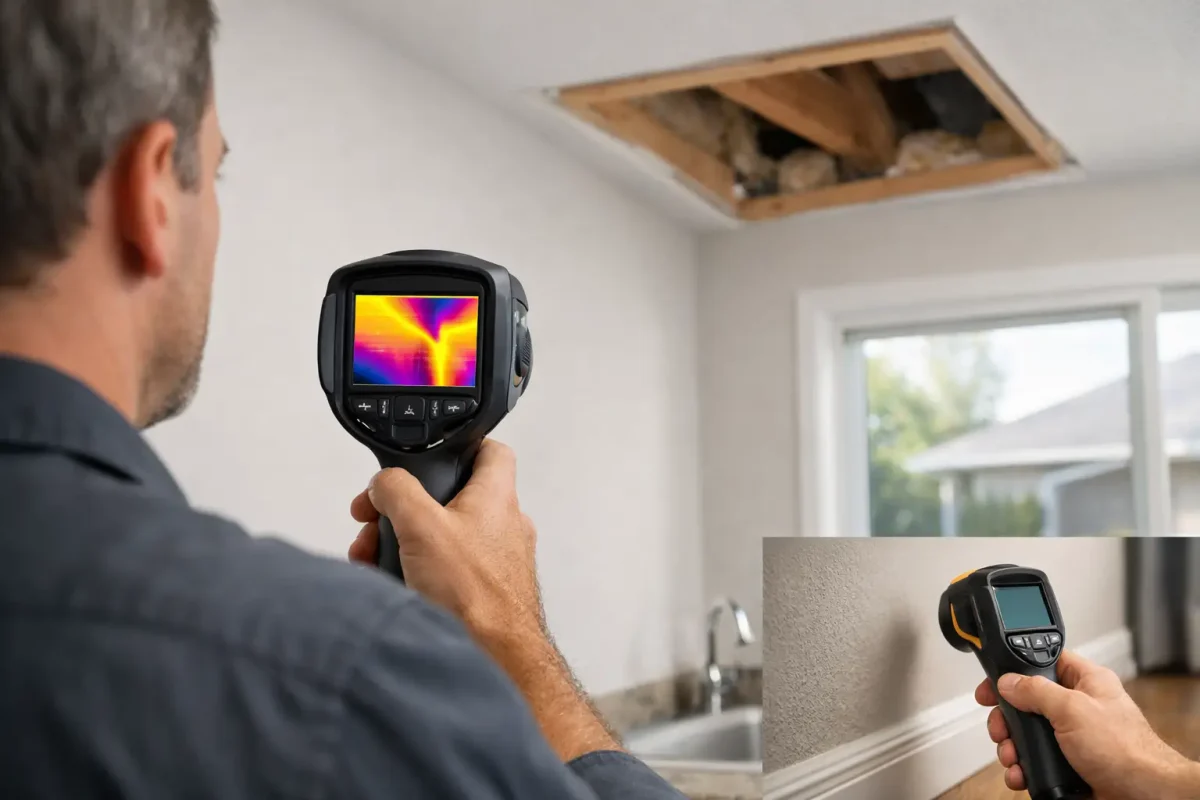
A dark patch on a thermal camera image can be the first warning of a concealed roof leak, plumbing issue, or insulation gap. It can also be a harmless temperature variation caused by sunlight, a metal fitting, or airflow. That distinction is why thermal imaging accuracy matters in a home inspection: the camera provides valuable evidence, but an experienced inspector must interpret what the image is actually showing.
For buyers, owners, and investors, thermal imaging can help identify concerns that are not visible during a standard walk-through. Used correctly, it supports a more informed decision before a purchase, handover, repair negotiation, or construction payment. Used carelessly, it can create false confidence or unnecessary alarm.
What Thermal Imaging Can and Cannot Detect
A thermal camera detects infrared energy emitted from a surface and displays temperature differences as colors or shades. In building inspections, those differences may point to moisture evaporation, missing insulation, air leakage, overheating electrical components, or variations in building materials.
The key word is may. A thermal camera does not see through walls, ceilings, tiles, or floors. It does not directly detect water, termites, mold, or structural damage. Instead, it identifies unusual surface-temperature patterns that warrant closer investigation.
For example, a cooler section of a ceiling below a tiled roof may suggest moisture from a roof leak. The same pattern could result from a poorly insulated area, cold air entering through a roof cavity, or recent rain cooling the roof structure. An inspector needs to compare the pattern with the building layout, visible condition, moisture-meter readings, weather conditions, and likely construction details before drawing a conclusion.
Thermal Imaging Accuracy Depends on the Conditions
Thermal imaging is highly useful when the right conditions exist. Its reliability is influenced by the property, the environment, the equipment, and the person using it. A quality camera alone cannot remove these variables.
Temperature differences must be present
A camera needs a meaningful temperature difference, often called a thermal gradient, to reveal a concern. If the inside and outside temperatures are similar, a missing insulation area may not appear clearly. Likewise, a slow plumbing leak may not create enough cooling from evaporation to stand out at the time of inspection.
Weather can either help or hinder the assessment. A recent rain event may make a moisture pattern easier to identify, but direct sun can heat roof coverings, external walls, and window frames unevenly. An inspection performed immediately after strong sunlight may show heat retained in materials rather than a defect. Timing and site conditions matter.
Surface materials can mislead the camera
Different materials emit and reflect infrared energy differently. Painted plasterboard is generally easier to assess than shiny metal, glazed tiles, glass, polished stone, or reflective foil insulation. A reflective surface may show the temperature of a nearby person, light fitting, or window rather than its own true surface temperature.
Angle and distance also affect the reading. Looking at a surface from an oblique angle can increase reflections and reduce confidence in the result. An experienced inspector changes position, checks comparable areas, and considers how the material should behave before treating an image as evidence of a defect.
Camera specifications and setup matter
Thermal sensitivity, image resolution, calibration, lens quality, focus, and temperature settings all influence what can be seen. A lower-resolution camera may identify a broad temperature anomaly but cannot always pinpoint its exact source. A well-focused camera with suitable sensitivity provides clearer patterns, particularly when inspecting electrical boards, ceiling areas, or subtle moisture concerns.
However, even a high-quality device has limitations. Thermal imaging should never be presented as a guarantee that a building is free from leaks, pests, or concealed defects. It is a non-invasive diagnostic tool, not X-ray vision.
How Inspectors Improve Thermal Imaging Accuracy
A proper inspection does not begin and end with a thermal scan. The camera is used as part of a methodical process that tests a finding from more than one angle.
First, the inspector completes a visual assessment. Staining, cracked sealant, deteriorated flashings, damaged roof tiles, poor drainage, swollen skirting boards, or movement around openings can provide context for a thermal anomaly. The building’s age, renovation history, orientation, and construction type are also relevant.
Next, the inspector scans areas where hidden defects commonly occur. These can include ceilings below roof areas, external wall junctions, wet-area walls, around windows and doors, electrical components, and accessible subfloors. A scan may also be useful during a pre-handover inspection where incomplete insulation, plumbing concerns, or workmanship defects need closer attention.
If the thermal image suggests moisture, a moisture meter can help verify whether elevated moisture is present in the material. This is particularly valuable around showers, bathrooms, laundries, kitchens, roof leaks, and window openings. Where safe and accessible, the inspector may compare the suspect area with an unaffected section of the same wall or ceiling.
This process matters because temperature differences are clues, not diagnoses. A cooler patch with an elevated moisture-meter reading, visible deterioration, and a likely source of water is far more persuasive than a color image on its own. Conversely, if a thermal anomaly has no supporting evidence, the report should explain the limitation and recommend monitoring or further targeted investigation where appropriate.
Common Findings That Benefit From Thermal Scanning
Thermal imaging can add real value where defects are concealed behind finished surfaces. In Melbourne properties, it is often useful after periods of rain, during cooler weather, and in homes with complex rooflines or older renovations. It can help identify patterns consistent with roof leaks before ceiling damage becomes obvious, or moisture around wet areas before deterioration spreads into adjoining rooms.
It can also assist with identifying insulation irregularities. A pronounced temperature difference across a ceiling or external wall may indicate missing, displaced, or poorly installed insulation. This does not always represent an urgent defect, but it can affect comfort, energy use, and the likelihood of condensation in some building designs.
Electrical scanning is another practical application. An unusually warm switchboard component, connection, or circuit may require prompt attention from a licensed electrician. Thermal findings in electrical areas need careful safety judgment. The camera can indicate abnormal heat, but it cannot confirm the cause or replace electrical testing.
For termite inspections, thermal imaging may sometimes help locate areas that deserve closer examination, especially where activity changes surface temperatures. It cannot confirm termite presence or replace a full pest inspection using suitable non-invasive detection equipment and visual evidence. Termites can remain concealed without producing a detectable thermal signature.
Why Interpretation Protects Your Property Decision
An inspection report should give you more than a collection of colored images. You need plain-English advice about what was observed, how confident the inspector is in the finding, what the likely implications are, and what should happen next.
A useful report distinguishes between a confirmed issue, an area of concern, and a limitation. It should include photographs where relevant and identify whether a licensed plumber, electrician, roofing contractor, engineer, or other specialist should investigate further. That clarity helps buyers avoid underestimating repair costs and helps owners prioritize maintenance before a small issue becomes expensive damage.
At Ausgun Building Inspections, thermal imaging is used alongside visual inspection, moisture testing, laser leveling, and construction experience rather than as a stand-alone service. This combined approach is designed to provide evidence that supports practical decisions, not dramatic claims based on a single image.
When a Thermal Scan Is Most Worthwhile
Thermal scanning is especially valuable when the stakes are high and concealed conditions could affect your decision. A pre-purchase inspection can reveal warning signs before you remove conditions or commit funds. A pre-handover inspection can identify areas needing builder attention before final acceptance. It can also assist owners investigating recurring ceiling stains, musty odors, cold rooms, suspected shower leaks, or unexplained increases in energy use.
There are times when results will be limited. Heavy rain, extreme heat, direct sunlight, restricted access, furnishings against walls, and a lack of temperature difference can all reduce what is visible. A professional inspector should explain these limitations rather than overstate the certainty of the scan.
Before you sign, settle, or accept handover, ask for an inspection that treats a thermal image as the start of the investigation, not the final answer. Careful interpretation, supporting tests, and clear advice give you the evidence needed to protect your investment with confidence.