
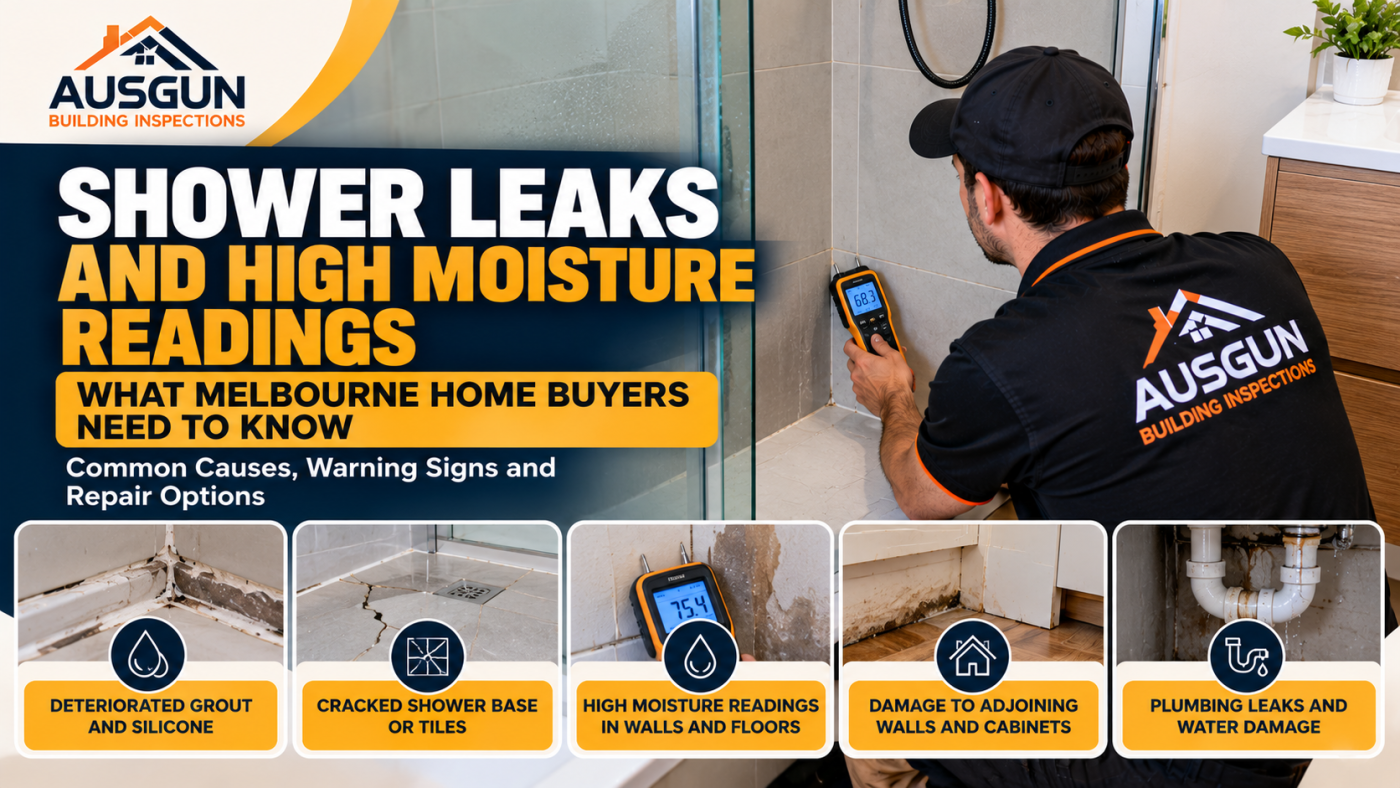
Shower leakage is one of the most common moisture-related problems identified during residential building inspections in Melbourne.
While a bathroom may appear clean and well-maintained, hidden moisture damage can develop behind shower tiles, beneath flooring and within adjoining walls.
Over time, ongoing water penetration can cause deterioration of building materials, damage to cabinetry and conditions that encourage mould growth.
At Ausgun Building Inspections, we regularly identify elevated moisture readings, deteriorated shower grout, cracked shower bases and signs of water leakage during pre-purchase building inspections across Melbourne and regional Victoria.
Understanding the warning signs of shower leakage can help homeowners and property buyers identify potential problems before they become more expensive to repair.
1. What Causes Shower Leaks?
Shower leakage can occur for several reasons.
Common causes include:
- Deteriorated grout between tiles
- Failed or missing silicone seals
- Cracked shower bases
- Damaged or loose tiles
- Defective waterproofing membranes
- Leaking plumbing connections
- Poor drainage
- Incorrect shower screen installation
The source of a shower leak is not always visible.
Water can travel through joints, behind tiles or along concealed building components before becoming noticeable in another area.
For this reason, further investigation may be necessary to determine the exact cause.
2. Deteriorated Grout and Silicone
Grout and silicone play an important role in the finishing and maintenance of tiled shower areas.
Over time, grout can crack or deteriorate, while silicone may shrink, separate or lose adhesion.
Common warning signs include:
- Missing grout between tiles
- Cracked grout joints
- Silicone separating from shower corners
- Gaps around shower screens
- Deteriorated sealant around shower bases
- Water escaping outside the shower enclosure
Although grout and silicone are not substitutes for a compliant waterproofing membrane, their deterioration can allow more water to reach underlying surfaces and contribute to moisture problems.
Recommendation: Deteriorated grout and silicone should be repaired by a suitably qualified tradesperson.
Where leakage is suspected, the underlying waterproofing system may require further investigation.
3. Cracked Shower Bases and Tiles
Cracked shower bases are another common issue identified during building inspections.
Cracks may develop due to movement, impact damage, inadequate support or deterioration of materials.
A cracked shower base can allow water to penetrate beneath the shower and affect surrounding building components.
Common signs include:
- Visible cracks in the shower base
- Cracked floor tiles
- Loose shower tiles
- Movement in the shower floor
- Water stains around the shower
- Moisture damage outside the bathroom
Recommendation: Cracked shower bases should be assessed and repaired or replaced as appropriate.
Applying silicone over a significant crack may not provide a reliable long-term solution.
4. What Do High Moisture Readings Mean?
During a building inspection, moisture meters may be used to assess accessible building surfaces.
Elevated moisture readings can indicate the presence of moisture within or behind building materials.
However, high moisture readings do not automatically confirm a plumbing leak or waterproofing failure.
Readings can be influenced by:
- Recent shower use
- Material composition
- Surface moisture
- Concealed metal components
- Plumbing leaks
- Water penetration
- Environmental conditions
An inspector considers the location of the readings, visible damage and other available evidence before making recommendations.
Where abnormal moisture readings are identified, further investigation may be required.
5. Moisture Damage Outside the Shower
One important warning sign is elevated moisture detected outside the shower enclosure.
Water escaping from a shower may affect:
- Skirting boards
- Adjoining bedroom walls
- Hallway walls
- Bathroom door frames
- Timber flooring
- Nearby cabinetry
- Carpet and underlay
For example, high moisture readings along the skirting board of a hallway adjoining a shower may indicate water penetration from the wet area.
However, other moisture sources must also be considered.
Recommendation: A qualified builder or waterproofing specialist should investigate the source and recommend appropriate repairs.
6. Can Shower Leaks Cause Structural Damage?
Yes. Prolonged water penetration can damage certain building materials and, in severe cases, affect structural components.
Potential consequences include:
- Timber decay
- Deterioration of flooring substrates
- Damage to wall framing
- Swollen cabinetry
- Plasterboard deterioration
- Corrosion of metal components
- Mould growth
The severity depends on the duration of leakage, the materials affected and the extent of moisture penetration.
Early investigation and repair can help reduce further damage.
7. Shower Leaks and Timber Pest Risks
Persistent moisture can create conditions conducive to certain timber pests, particularly termites.
Termites are attracted to environments that provide suitable moisture and food sources.
While a leaking shower does not automatically mean termites are present, ongoing moisture problems may increase the risk of timber pest activity in susceptible areas.
Property owners should address water leakage promptly and consider a timber pest inspection where appropriate.
8. How Do Building Inspectors Check for Shower Leaks?
During a pre-purchase building inspection, the inspector may assess visible shower defects and use moisture detection equipment where appropriate.
Common inspection methods include:
Visual assessment: Checking grout, silicone, tiles, shower bases and surrounding surfaces.
Moisture meter readings: Assessing accessible surfaces for abnormal moisture indications.
Thermal imaging: Identifying temperature differences that may assist in locating areas requiring further investigation.
Adjoining room assessment: Checking nearby walls, skirting boards and cabinetry for visible moisture damage.
These methods can help identify potential problems but do not guarantee the detection of concealed leakage.
Specialist testing may be required to confirm the source.
9. Can Shower Leaks Be Repaired Without Replacing the Entire Shower?
In some cases, yes.
The appropriate repair depends on the cause and extent of the problem.
Possible repairs include:
- Regrouting tiles
- Replacing deteriorated silicone
- Repairing plumbing leaks
- Replacing damaged shower screens
- Repairing or replacing cracked shower bases
- Replacing damaged tiles
However, where the waterproofing membrane has failed or concealed building materials are significantly damaged, more extensive renovation work may be necessary.
A qualified tradesperson should determine the appropriate repair method after investigating the source of leakage.
10. When Is a Full Shower Renovation Necessary?
A full shower renovation may be required where there is widespread waterproofing failure or significant concealed damage.
Depending on the condition of the shower, the work may involve:
- Removing the existing shower screen and fixtures.
- Removing damaged wall tiles and wall sheeting.
- Assessing and repairing concealed building components.
- Installing suitable wall sheeting.
- Applying a compliant waterproofing system.
- Installing new wall tiles.
- Grouting and sealing required joints.
- Reinstalling or replacing shower fixtures.
Waterproofing work should comply with applicable Australian Standards and building requirements, including AS 3740 where relevant.
11. Should You Buy a House With a Leaking Shower?
A leaking shower does not automatically mean the property should be avoided.
However, buyers should understand the potential repair costs before purchasing.
Recommended steps include:
- Review the building inspection findings.
- Investigate abnormal moisture readings.
- Obtain quotations for repairs.
- Consider whether concealed damage may be present.
- Discuss significant findings with your conveyancer.
In some cases, simple maintenance may resolve the issue.
In other situations, extensive waterproofing repairs or a complete shower renovation may be necessary.
12. Why Is a Pre-Purchase Building Inspection Important?
A professional building inspection can help identify visible moisture-related defects before a buyer commits to purchasing a property.
Common findings include:
- Deteriorated grout and silicone
- Cracked shower bases
- Elevated moisture readings
- Water damage to adjoining walls
- Damaged cabinetry
- Visible signs of plumbing leakage
Although an inspection cannot identify every concealed defect, it can highlight concerns requiring further investigation.
Why Choose Ausgun Building Inspections?
Ausgun Building Inspections provides professional inspection services across Melbourne and regional Victoria.
Our inspectors assess accessible building components for visible defects, moisture-related damage and other building concerns.
Where appropriate, we use moisture meters and thermal imaging cameras to assist with identifying areas requiring further assessment.
Our services include:
- Pre-Purchase Building Inspections
- Combined Building and Pest Inspections
- Timber Pest Inspections
- Construction Stage Inspections
- Practical Completion Inspections
- Section 137B Owner Builder Reports
- Rental Minimum Standards Inspections
Our goal is to provide clear reports and practical recommendations that help buyers understand the condition of their prospective property.
Book Your Building Inspection in Melbourne
Are you concerned about shower leakage, moisture damage or waterproofing defects in a property you are planning to purchase?
Arrange a professional building inspection before making your final decision.
Ausgun Building Inspections provides inspection services across Melbourne and regional Victoria.
Don’t Buy Before You Inspect!
Contact us today to arrange your inspection.
Website: https://ausgunbuildinginspections.com.au/
Your Property, Our Priority.