
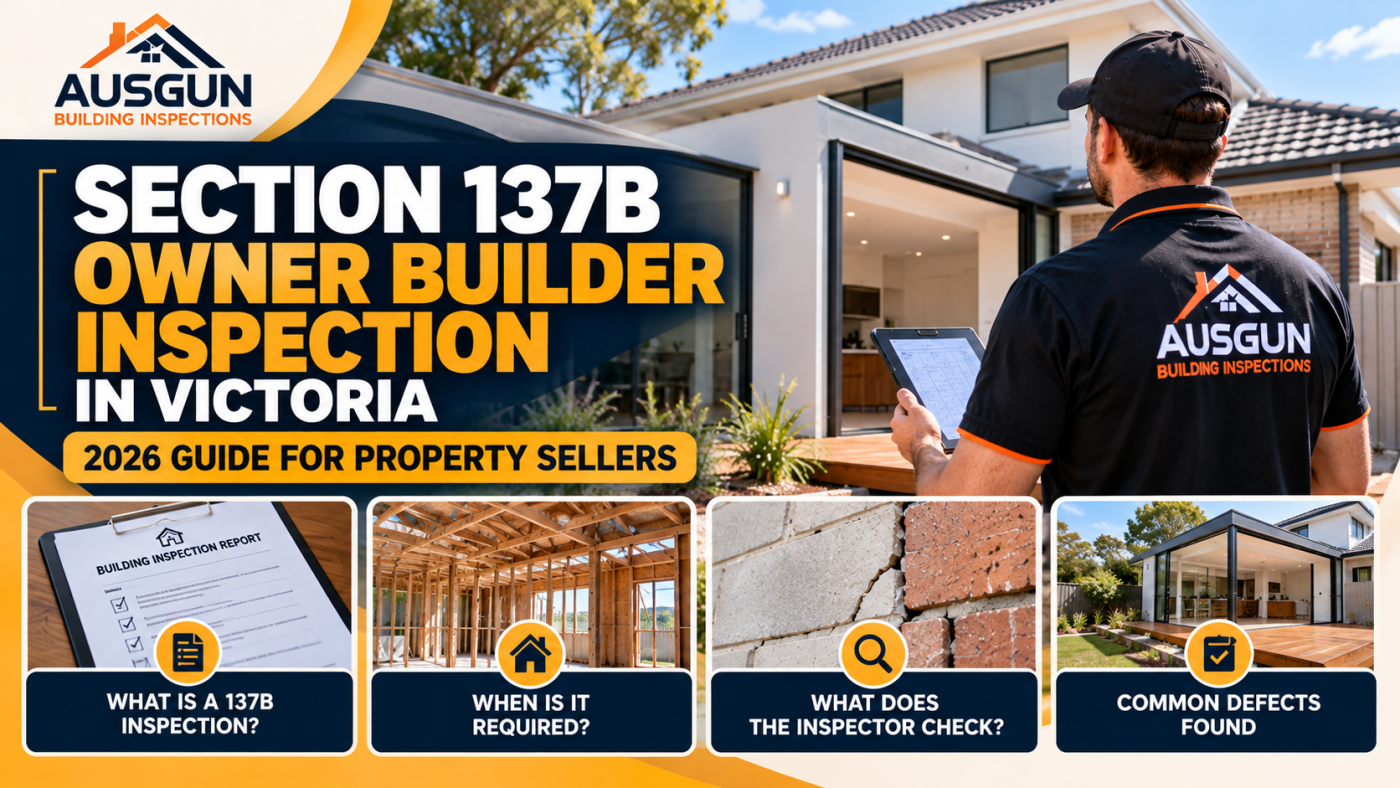
Are you planning to sell a property in Victoria after completing building or renovation work as an owner-builder?
You may need a Section 137B Owner Builder Defects Inspection Report before selling your property.
Under the Building Act 1993 (Victoria), owner-builders have specific obligations when selling properties where domestic building work has been completed within the previous six years and six months.
At Ausgun Building Inspections, we provide Section 137B Owner Builder Defects Inspection services across Melbourne and regional Victoria, helping property owners identify building defects and prepare the required inspection documentation.
This guide explains what a Section 137B inspection is, when it is required and what property owners should know before selling.
1. What Is a Section 137B Owner Builder Inspection?
A Section 137B inspection is a building defects inspection required under Section 137B of the Building Act 1993 in certain owner-builder property sales.
The purpose is to identify defective or non-compliant domestic building work carried out by or on behalf of an owner-builder.
The inspection may relate to:
- Newly constructed houses
- Home extensions
- Major renovations
- Garage construction
- Verandahs and pergolas
- Other relevant domestic building work
The resulting report provides information about the condition of the owner-builder work for prospective purchasers.
2. When Is a Section 137B Report Required?
In Victoria, an owner-builder generally needs to provide a Section 137B defects inspection report when selling a property within six years and six months of completing the owner-builder work.
The report must be obtained no more than six months before the sale.
For example, if an owner-builder completed an extension three years ago and now wishes to sell the property, a Section 137B inspection report would generally be required.
The requirement can apply to renovations, extensions and other domestic building work, not just newly constructed houses.
Property owners should confirm the relevant completion date and requirements with their conveyancer or legal representative.
3. Who Can Prepare a Section 137B Report?
A Section 137B defects inspection report must be prepared by an appropriately qualified and prescribed building practitioner.
The inspector must be eligible to undertake the inspection and prepare the report under Victorian requirements.
A standard pre-purchase building inspection report should not automatically be treated as a Section 137B report.
The report must address the relevant owner-builder work and satisfy the applicable statutory requirements.
Before booking, confirm that the inspection provider can issue the required Section 137B report.
4. What Does a Section 137B Inspector Check?
The inspection focuses on the relevant domestic building work carried out by the owner-builder.
Depending on the type of construction and accessibility, the inspector may assess:
Structural components: Visible cracking, movement, framing defects and deterioration.
Roofing: Roof coverings, flashing, gutters and accessible roof framing.
External walls: Brickwork, cladding, render and external finishes.
Internal areas: Walls, ceilings, floors, doors and windows.
Wet areas: Visible waterproofing concerns, shower defects, drainage and moisture-related damage.
External structures: Relevant extensions, garages, verandahs and other owner-built structures.
Incomplete works: Construction items that remain unfinished or require rectification.
The inspection is generally visual and subject to access limitations.
5. Common Defects Found During Owner Builder Inspections
Owner-builder projects can contain a range of construction and workmanship defects.
Common examples include:
Structural cracking
Cracking in brickwork or other building components may indicate settlement, movement or construction-related defects.
Significant cracking may require further assessment by a structural engineer.
Roof flashing defects
Poorly installed flashing can allow water to penetrate the building.
Shower waterproofing concerns
Deteriorated grout, failed silicone, cracked tiles and moisture damage may indicate problems requiring investigation.
Incomplete building works
Missing fixtures, unfinished surfaces and incomplete construction details may need to be documented.
Poor external finishing
Gaps around windows, defective cladding and incomplete weatherproofing may affect the building’s performance.
The severity of each defect depends on the circumstances and the applicable building requirements.
6. Does the Report Need to Identify Every Defect?
A Section 137B defects report must document identified defective or non-compliant owner-builder work in accordance with the applicable requirements.
However, the inspection is subject to practical limitations.
Concealed defects behind walls, inaccessible structural components and problems that are not visible at the time of inspection may not be identified.
The report should clearly describe relevant defects, include supporting photographs and identify applicable inspection limitations.
7. Does a Section 137B Report Expire?
Yes.
A Section 137B defects inspection report must be no more than six months old when used for the relevant property sale.
If the sale is delayed and the report becomes too old, a new inspection and report may be required.
For this reason, owners should coordinate the inspection with their selling agent and conveyancer.
8. Is Owner Builder Insurance Required?
Owner-builder insurance obligations are separate from the requirement to obtain a defects inspection report.
Under Victoria’s current Home Warranty arrangements, insurance requirements depend on the date of the work, its value and the applicable statutory rules.
For example, the Building and Plumbing Commission advises that owner-builders selling relevant work completed less than six and a half years ago, with a project value exceeding $20,000, must obtain the applicable cover.
The Home Warranty arrangements changed in July 2026, so owners should not rely on older insurance thresholds or policy information.
Before signing a contract of sale, obtain advice from your conveyancer and confirm the insurance requirements with the Building and Plumbing Commission.
9. What Happens If Defects Are Found?
Finding defects does not automatically prevent an owner-builder from selling the property.
However, identified defects must be properly disclosed in the required report.
Depending on their nature and severity, the owner may choose to arrange repairs before selling.
Where structural or technical concerns are identified, specialist advice may be required.
Defects disclosed in the report may also affect insurance coverage, so owners should discuss the implications with their insurer and conveyancer.
10. What Documents Should an Owner Builder Prepare?
Before arranging the inspection, it is helpful to gather relevant documents, including:
- Building permit
- Owner Builder Certificate of Consent, where applicable
- Occupancy Permit or Certificate of Final Inspection
- Approved building plans
- Relevant engineering documentation
- Building and plumbing certificates
- Details of the completed works
- Previous inspection reports
Having these documents available can help clarify the scope and history of the owner-builder project.
11. Is a Section 137B Report the Same as a Pre-Purchase Inspection?
No.
A pre-purchase building inspection is generally arranged by a buyer to assess the visible condition of a property before purchasing.
A Section 137B inspection is arranged to satisfy specific owner-builder sale requirements under Victorian legislation.
Although both inspections may identify building defects, their purpose, reporting requirements and scope can differ.
Property sellers should ensure they book the correct inspection service.
12. How Much Does a Section 137B Inspection Cost in Melbourne?
The cost of a Section 137B Owner Builder Inspection depends on several factors.
These include:
- Size of the property
- Type of owner-builder work
- Complexity of the construction
- Accessibility
- Property location
- Extent of the inspection and reporting requirements
For example, an inspection of a small renovation may differ from an inspection of an entire owner-built house.
Contact Ausgun Building Inspections with the property address and details of the owner-builder works to request a quotation.
13. When Should You Book Your Section 137B Inspection?
It is best to arrange the inspection before finalising the sale documentation.
Booking early allows time to:
- Complete the inspection.
- Receive the defects report.
- Investigate significant findings.
- Arrange any necessary repairs.
- Provide the documentation to your conveyancer.
- Confirm the applicable insurance requirements.
Remember that the report must remain within its six-month validity period for the relevant sale.
14. Why Choose Ausgun Building Inspections?
Ausgun Building Inspections provides professional building inspection services across Melbourne and regional Victoria.
We assist property owners with Section 137B Owner Builder Defects Inspections and other building assessment services.
Our inspection services include:
- Section 137B Owner Builder Inspections
- Pre-Purchase Building Inspections
- Building and Pest Inspections
- Construction Stage Inspections
- Practical Completion Inspections
- Rental Minimum Standards Inspections
Our goal is to provide clear inspection reports identifying observed building defects and areas requiring further attention.
Book Your Section 137B Owner Builder Inspection in Melbourne
Are you selling a property after completing owner-builder construction or renovation work?
You may need a Section 137B defects inspection report before entering into a contract of sale.
Ausgun Building Inspections provides Section 137B inspection services across Melbourne and regional Victoria.
Contact our team to discuss your property, inspection requirements and quotation.
Book Your Section 137B Inspection Today
Website: https://ausgunbuildinginspections.com.au/
Your Property, Our Priority.