A low floorboard near the back door, a faint musty smell in a bedroom, or fresh paint over a stained ceiling can signal a costly problem. The choice between building inspections vs pest inspections is not about picking the more thorough service. They investigate different risks, and a property can pass one while still carrying serious issues found by the other.
For buyers, investors, and homeowners, the practical question is usually whether to book both before committing to a purchase. In most cases, particularly for an established home in Melbourne or regional Victoria, the answer is yes. A combined pre-purchase building and pest inspection gives you a clearer view of the property’s physical condition and its exposure to timber pest damage.
Building Inspections vs Pest Inspections: The Core Difference
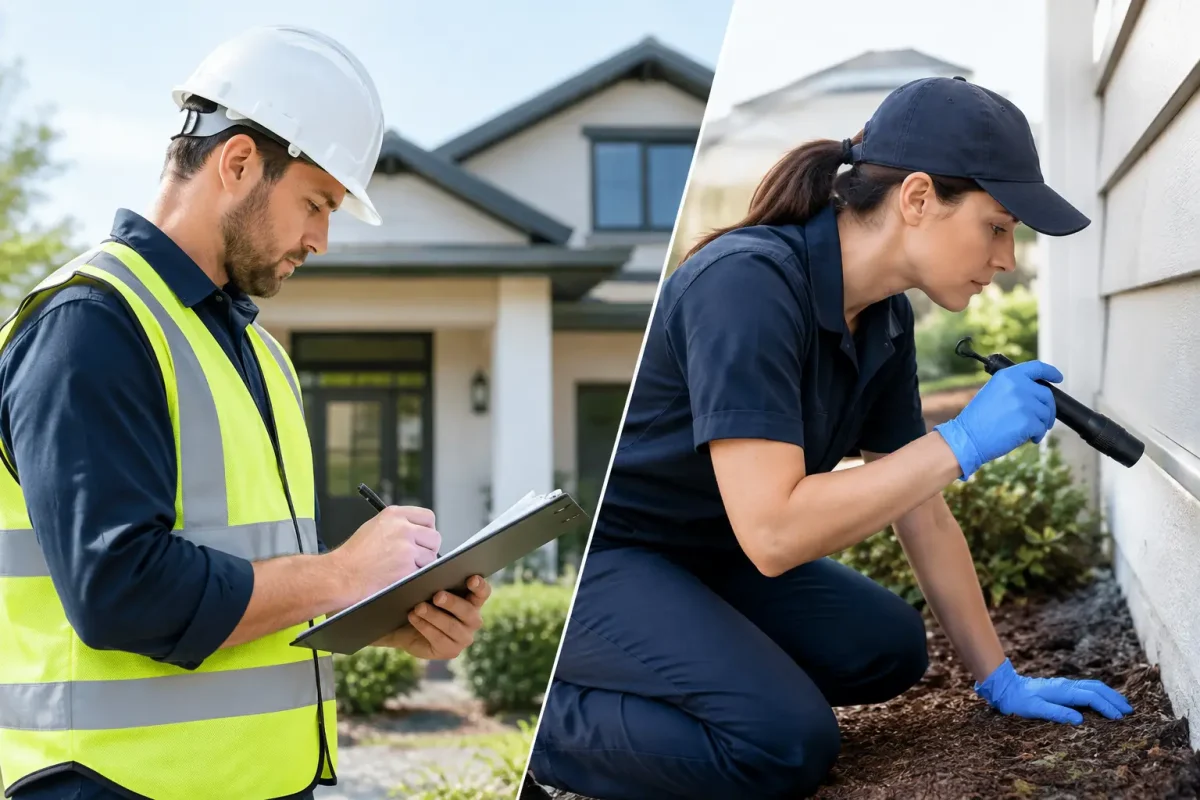
A building inspection assesses the condition of the building itself. It focuses on visible and accessible defects, incomplete workmanship, safety concerns, moisture indicators, movement, and maintenance issues that could affect the property’s value, usability, or future repair costs.
A pest inspection focuses on evidence of timber pests, particularly termites, as well as conditions that make pest activity more likely. The inspector looks for live activity, prior damage, entry points, conducive conditions, and areas where damage may be concealed behind finishes or within inaccessible spaces.
There is overlap. Moisture, for example, matters to both inspections. A building inspector may identify a leaking shower, poor drainage, or damp subfloor ventilation. A pest inspector considers whether that moisture creates favorable conditions for termites or timber decay. But these findings are not interchangeable.
A building report might identify warped skirting boards and moisture staining without determining whether pests have contributed to the damage. A pest report may find termite-damaged timber but not provide a complete assessment of broader structural movement, roof defects, or unfinished building work. Booking both avoids relying on one narrow view of a much larger risk picture.
What a Building Inspection Is Designed to Find
A pre-purchase building inspection is a condition assessment, not a cosmetic walkthrough. Its purpose is to identify major defects, safety issues, and material maintenance concerns that a buyer may not recognize during an open inspection.
The inspection generally covers accessible elements such as the roof exterior, roof space, interior rooms, subfloor where access allows, external walls, windows, doors, decks, garages, drainage around the home, and visible service-related features. The exact scope depends on the property type, access, and the agreed inspection standard.
Structural and movement concerns
Cracks are common, especially in older homes, but not every crack is harmless. An experienced inspector considers the pattern, location, width, and surrounding signs. Stair-step brick cracking, uneven floors, doors that no longer close properly, or gaps around windows can indicate movement that deserves further investigation.
Laser leveling can help identify floor variations that are difficult to judge by eye. This does not automatically prove a structural failure, but it provides useful evidence when assessing settlement, footing movement, or whether specialist engineering advice may be needed.
Water entry and moisture damage
Water is one of the most expensive sources of hidden property damage. Building inspections can reveal staining, deteriorated sealants, defective flashing, plumbing leaks, poor site drainage, and moisture readings that suggest concealed water entry.
Thermal imaging and moisture meters can support a visual inspection by identifying temperature differences or elevated moisture levels behind walls, beneath ceilings, and around wet areas. These tools do not see through every building material or replace invasive testing, but they can direct attention to areas requiring further investigation.
Defects, safety issues, and incomplete work
A building inspection can also identify defective workmanship, damaged roofing, deteriorated external cladding, unsafe balustrades, trip hazards, poor ventilation, and visible electrical or plumbing concerns. On newer homes, it may expose incomplete finishes, faulty waterproofing indicators, uneven surfaces, poorly installed fixtures, or items that should be addressed before handover.
The value of the report is not just a list of defects. It is the ability to separate routine maintenance from issues that could affect your purchase decision, your negotiation position, or your immediate repair budget.
What a Pest Inspection Is Designed to Find
A pest inspection is primarily concerned with timber pests and their impact on the property. In Victoria, termites are a central concern because they can damage timber framing, flooring, joinery, and other concealed elements without obvious signs from inside the home.
Termites do not need a dramatic, visible nest inside a wall to create a major problem. They can travel through concealed paths, exploit gaps near plumbing penetrations, and feed in areas hidden by plasterboard, insulation, cabinetry, or floor coverings. By the time damage is obvious, repairs may be substantial.
A pest inspector looks for signs including mud leads, termite workings, hollow or damaged timber, previous treatment evidence, high-moisture zones, timber-to-ground contact, poor subfloor ventilation, and landscaping or drainage conditions that raise the risk of activity.
Active termites, old damage, and risk conditions
These are three different findings, and each has a different implication. Active termites need prompt treatment by a licensed pest management professional. Old termite damage may still require further assessment because the timber could have lost structural capacity, even if the infestation is no longer active.
Risk conditions do not mean termites are present. They mean the property offers conditions that could attract or support termite activity. Examples include leaking taps, poor drainage, stored timber against the house, concealed weep holes, or limited access to a subfloor. A careful report explains the distinction so buyers do not mistake a risk factor for confirmed infestation, or dismiss a genuine warning because they did not see live termites.
Non-invasive termite detection equipment can assist with checking accessible concealed areas without damaging finishes. However, no non-invasive inspection can guarantee that every termite or every hidden defect will be found. Access restrictions, wall linings, stored goods, insulation, and landscaping all limit what can be inspected.
Why One Inspection Cannot Replace the Other
The assumption that a building inspection includes pest checks is one of the most common pre-purchase mistakes. Some providers offer a combined service, while others perform only a building inspection unless a separate pest component is requested. Always confirm the scope in writing before booking.
The opposite assumption is equally risky. A pest clearance does not mean the house is structurally sound, dry, safe, or well built. It only means the pest inspection did not identify relevant activity or damage within the visible and accessible areas at the time of inspection.
Consider a few common scenarios. A townhouse may have no termite evidence but serious balcony waterproofing defects. A brick veneer home may appear solid but have concealed termite damage to framing near a wet area. A newly built property may have no pest concern while still presenting incomplete work or defects that should be recorded before final payment.
The right inspection package depends on the property, but the financial exposure usually makes a combined assessment sensible. The inspection fee is small compared with the cost of structural repairs, termite treatment, waterproofing failures, drainage rectification, or a dispute after settlement.
When to Book a Combined Building and Pest Inspection
Book before your purchase contract becomes unconditional whenever possible. A report is most useful when you still have time to request repairs, renegotiate the price, seek specialist advice, or walk away under an applicable inspection condition.
For auction purchases, the timing is more urgent. Because buyers may not have a cooling-off period or a building and pest condition after a successful auction bid, arrange the inspection before auction day. Do not assume a vendor-provided report is enough. It may be limited in scope, outdated, or prepared for someone else’s reliance.
Investors should be especially careful with properties that have been vacant, heavily renovated, rented for long periods, or located in areas with drainage challenges. First-home buyers should treat the inspection as an evidence-gathering exercise, not a pass-or-fail certificate. Almost every property has defects. The key is understanding their seriousness, likely cost, and urgency.
How to Get More Value From the Report
Choose an inspector who explains what was found in plain language and supports key findings with clear photographs. Detailed evidence helps when discussing repairs with a vendor, builder, property manager, or tradesperson.
Read the report promptly, then ask questions about the defects that could change your decision. You should understand which items are major, which need a specialist assessment, what access limitations affected the inspection, and which repairs should be prioritized after settlement.
Ausgun Building Inspections combines building knowledge, diagnostic equipment, and practical reporting to help clients make those decisions with clearer evidence. A fast report is useful, but an accurate explanation of what the evidence means is what protects your investment.
Before you commit to a property, ask for both views of its condition. A building inspection can show you how the home is performing. A pest inspection can reveal what may be quietly damaging it. That clarity gives you a far better basis for moving forward, negotiating firmly, or deciding that the risk is not worth taking.