
A fresh coat of paint, a clean vanity, and a dry-looking ceiling can make a property feel move-in ready. Yet a slow leak behind a shower wall, beneath a kitchen sink, or inside a roof cavity may already be causing damage that is expensive to repair. Can inspectors detect hidden leaks? Often, yes – but a professional inspection is about identifying evidence of moisture and the conditions that cause it, not making promises about what cannot be seen without opening the building.
For buyers, that distinction matters. A concealed leak can lead to swollen cabinetry, damaged framing, mold growth, deteriorated plaster, electrical risks, and pest-friendly conditions. Finding warning signs before contracts become unconditional gives you clearer grounds for further investigation, repair negotiations, or a more informed decision.
Can Inspectors Detect Hidden Leaks With Non-Invasive Testing?
A qualified building inspector can detect many hidden moisture issues without removing tiles, cutting walls, or lifting flooring. The process combines experienced visual assessment with diagnostic equipment and an understanding of how buildings fail over time.
No single tool proves every leak. Thermal imaging may reveal a temperature pattern consistent with moisture, while a moisture meter can indicate elevated readings in a wall, ceiling, skirting board, or cabinet. The inspector then compares those readings with surrounding materials, visible staining, construction details, and likely water sources. This is how a small visual clue becomes useful evidence rather than a guess.
At Ausgun Building Inspections, this approach is supported by more than 17 years of construction experience, detailed reporting, and non-invasive diagnostic tools. The objective is practical: show clients what was observed, explain why it may matter, and identify whether a plumber, waterproofing specialist, roofer, or other trade should investigate further.
What an inspector can find
Hidden leaks commonly leave traces before they become obvious. During a pre-purchase inspection, an inspector may identify elevated moisture readings around shower recesses, bathrooms, laundries, kitchens, hot water systems, roof penetrations, windows, and external walls. They may also find peeling paint, bubbling finishes, rusted fixings, soft or swollen timbers, cracked sealant, deteriorated grout, stains, musty odors, or unexplained damage to ceilings and floor coverings.
Thermal imaging is especially useful for locating areas that warrant closer attention. Wet materials can heat and cool differently from dry materials, creating an unusual pattern in a thermal image. However, a cool patch is not automatically a leak. It could result from insulation gaps, air movement, shade, or a change in building material. Experienced interpretation and moisture testing are essential.
What an inspector cannot guarantee
A standard visual, non-invasive inspection is not a plumbing pressure test, leak-detection survey, or destructive investigation. If a leak is intermittent, recently dried, hidden behind waterproof barriers, or inaccessible due to furniture, stored items, insulation, locked rooms, or enclosed service areas, it may not be detectable at the time of inspection.
Inspectors also generally do not run showers for extended periods, flood-test balconies, remove access panels, dismantle cabinetry, or scan every inch of a property behind finished surfaces. Those steps may require the owner’s approval and a specialist with the appropriate equipment. A good inspection report should clearly state these limitations rather than overstate certainty.
Where Hidden Leaks Usually Start
Water does not need a dramatic burst pipe to cause trouble. Slow, persistent moisture is often more damaging because it can go unnoticed for months or years. In Melbourne homes, common problem areas include aging bathrooms, roof and gutter systems, poorly sealed windows, balconies, subfloors, and plumbing connections within kitchen and laundry cabinets.
Bathrooms are a frequent concern because failed waterproofing can allow water to migrate beyond the shower enclosure. Cracked tiles do not always mean waterproofing has failed, and intact tiles do not guarantee it has not. Elevated moisture at adjoining walls, door jambs, skirting boards, or nearby rooms can be more revealing than the shower surface itself.
Roof leaks may appear far from the actual entry point. Water can travel along roof framing, electrical conduits, or ceiling linings before it becomes visible. An inspector will look for roof defects where safely accessible, as well as staining, sagging, insulation disturbance, mold-like growth, and moisture around ceiling penetrations below.
External leaks can come from defective flashing, cracked render, blocked gutters, poor drainage, damaged cladding, or failed window seals. These issues are particularly relevant when a property shows internal staining after rain but reads dry on a clear inspection day. The building’s history and visible maintenance condition help put the findings in context.
How Moisture Testing Supports a Purchase Decision
A moisture meter does not diagnose a plumbing fault by itself. Readings vary according to material type, thickness, salts, metal behind a wall, and the meter setting being used. What matters is the pattern: whether readings are unusually high, whether they are localized around a water source, and whether adjacent materials show related damage.
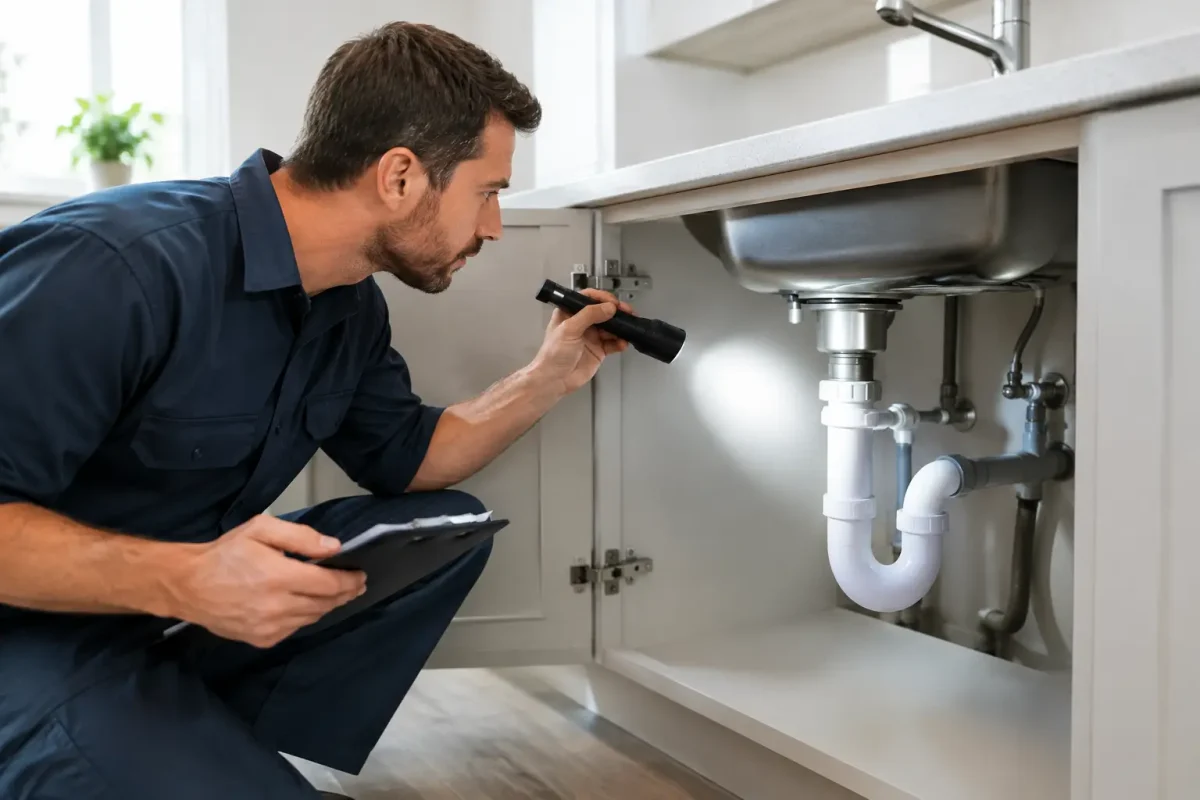
For example, a high reading beneath a kitchen sink may be caused by a loose trap, a leaking appliance hose, or a past spill. If the cabinet base is swollen and the reading remains elevated, the issue deserves attention even if it is not actively dripping during the inspection. By contrast, a single isolated reading on a wall containing metal framing may need a different explanation.
This is why photographic evidence, clear location details, and plain-English recommendations are valuable. A useful report does not simply say “moisture detected.” It identifies the affected area, describes the visible condition, records the testing result where appropriate, explains the possible consequence, and recommends proportionate next steps.
When a Specialist Leak Investigation Is Needed
If the inspection identifies signs of concealed moisture, do not assume the repair is minor or wait for the problem to become visible. The right next step depends on the location and severity of the finding.
A licensed plumber may pressure-test supply lines, inspect drainage, use acoustic equipment, or conduct a targeted leak investigation. A waterproofing or bathroom specialist may assess a shower recess and adjacent finishes. Roofing contractors can investigate roof coverings, flashing, valleys, penetrations, and drainage. Where substantial moisture, mold-like growth, or structural deterioration is suspected, further assessment should occur before settlement where possible.
For buyers, the timing is critical. Ask for additional investigation while you still have the ability to obtain information, negotiate repairs or price, or reconsider the purchase under the terms of your contract. Your conveyancer or legal adviser can explain the options available to you. An inspection report gives you technical evidence to start that conversation; it does not replace legal, plumbing, or specialist waterproofing advice.
Warning Signs Buyers Should Not Ignore
Some properties show clear clues even before testing begins. Be cautious when you see recent patch painting confined to one section of wall or ceiling, fresh silicone around an older shower, warped laminate flooring, staining at cornices, peeling paint, loose tiles, persistent musty odors, or cabinet bases that feel soft.
Also pay attention to the seller’s disclosures and the age of wet areas. A renovated bathroom may look excellent, but workmanship quality and waterproofing cannot be judged on appearance alone. Conversely, an older bathroom is not automatically defective. The question is whether current evidence points to moisture intrusion, deterioration, or poor detailing that could lead to failure.
A Careful Inspection Protects More Than the Purchase Price
Hidden leaks are rarely just a cosmetic concern. Water can affect finishes, structural components, indoor air quality, electrical safety, and the value of the property. The earlier the issue is identified, the more choices you have and the less likely you are to inherit a costly surprise.
Before you commit to a property, choose an independent inspector who uses appropriate diagnostic tools, explains the limits of the inspection, and gives you evidence you can act on. A dry-looking room is reassuring, but a careful assessment of what may be happening behind the surface is far more valuable.