A freshly painted wall, clean floor coverings, and tidy garden beds can make a property feel well maintained. They cannot tell you whether termites have been active behind a wall, whether moisture is attracting timber pests under the floor, or whether old damage has been concealed. Pest inspections give buyers evidence about those risks before a purchase becomes their responsibility.
For a Melbourne buyer, this is not a minor box to tick before signing a contract. Termite damage, fungal decay, wood-boring insect activity, and drainage conditions can turn a promising home into an expensive repair project. The right inspection does not create fear. It gives you a clear view of what can be seen, what needs further investigation, and what should affect your decision or negotiation.
What Pest Inspections Are Designed to Find
A professional pest inspection focuses on conditions that can damage timbers or make a building more vulnerable to infestation. Termites are the primary concern because they can feed within concealed timbers for long periods without obvious signs from inside the home. By the time skirting boards sound hollow or a door frame starts to distort, the damage may be substantial.
The inspection also considers borers, wood decay, moisture entry, poor ventilation, leaking plumbing, and ground conditions around the building. Not every issue is active pest activity, but each can be relevant. Wet subfloors, leaking showers, overflowing gutters, garden beds against external walls, and timber stored beneath the home can create favorable conditions or obscure early warning signs.
A thorough inspection is therefore about more than looking for insects. It is an assessment of the building environment, its accessible timber components, and the pathways pests may use to enter or remain hidden.
Why a Pest Check Matters Before You Commit
Property buyers often assume that a home without visible damage is pest-free. Unfortunately, termites do not need to leave obvious evidence in a living room to cause serious deterioration. They may enter through concealed areas, travel behind linings, or move through roof and subfloor spaces that buyers rarely inspect during an open house.
The financial impact can be significant. Repairs may involve replacing damaged framing, floor structures, joinery, wall linings, or roof timbers. If moisture is the underlying cause, the repair scope can also include drainage correction, plumbing work, waterproofing, ventilation improvements, and treatment of decay.
A pre-purchase pest inspection gives you an opportunity to pause before the property becomes yours. Depending on the findings, you may decide to seek specialist advice, request access for further investigation, negotiate the price, ask for repairs, or walk away. The best outcome is not always a defect-free report. It is knowing the true condition of the asset before you take on the risk.
A combined building and pest inspection offers better context
Pest findings are often connected to building defects. A leaking roof penetration can create damp roof timbers. Inadequate drainage can direct water toward the subfloor. A cracked shower recess can allow moisture into concealed framing. Looking at the building and pest risks together helps explain not only what has been found, but why it may have occurred and what may be required to address it.
This is particularly useful for older homes, renovations, extensions, and properties with limited underfloor or roof access. It can also be valuable in newer homes. A recent build is not automatically protected from moisture defects, poor site drainage, incomplete termite management measures, or workmanship issues that may create future pest risk.
What a Thorough Inspection Looks Like
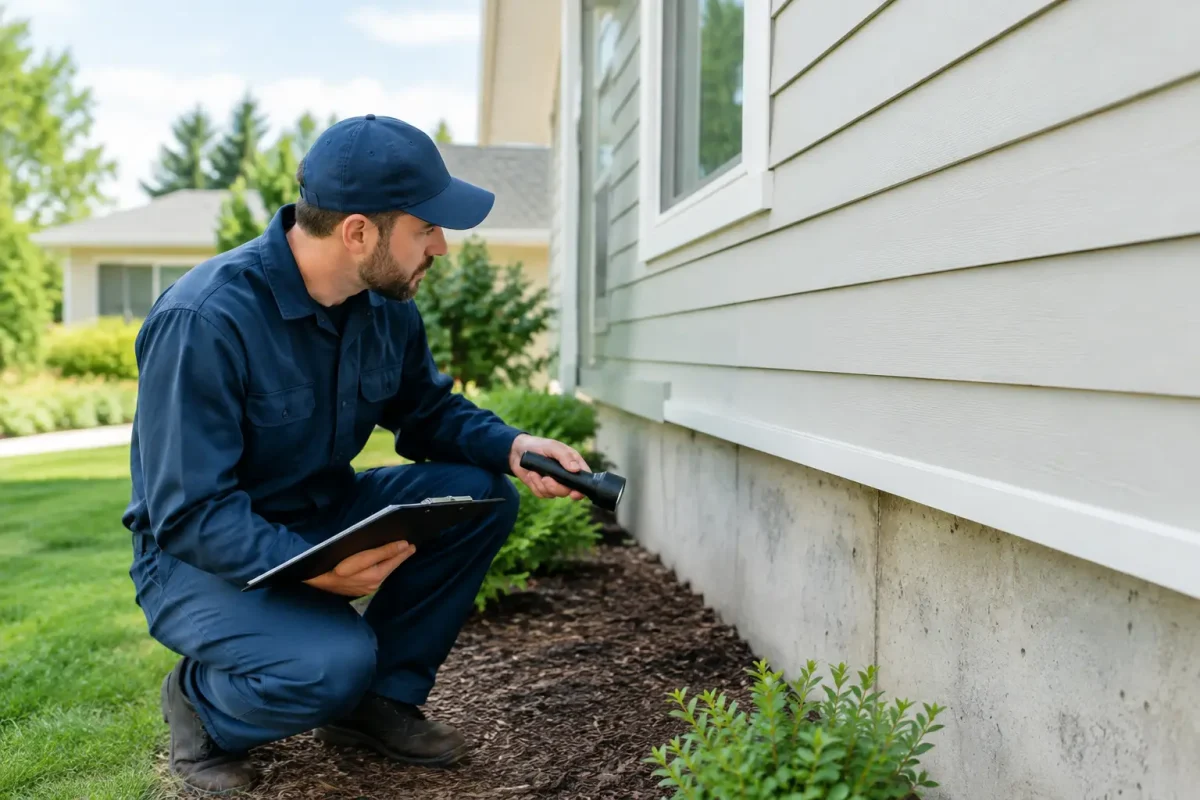
A proper inspection starts outside. The inspector assesses the site, visible exterior walls, weep holes where present, garden beds, paving, drainage, fences, retained soil, timber structures, and obvious entry points. These details matter because termite management is strongly influenced by what happens at ground level.
Inside, accessible wall areas, floors, ceilings, wet areas, door frames, window frames, skirting boards, cabinets, and other visible timbers are examined for signs of damage or abnormal moisture. Roof voids and subfloor spaces are checked where safe and reasonably accessible. The inspector will also look for conditions that restrict visibility or increase risk.
Diagnostic equipment adds useful evidence without damaging the property. Moisture meters can help identify elevated moisture in suspect areas. Thermal imaging may assist in locating temperature patterns consistent with moisture anomalies, while non-invasive termite and insect detection tools can help investigate concealed zones. These tools support the inspection, but they do not replace experienced judgment or open up sealed building elements.
At Ausgun Building Inspections, the goal is to explain findings in practical terms: whether activity appears current or historic, what limitations apply, the likely level of concern, and the next sensible step. Clear photographs and plain-English commentary matter because buyers need more than technical language. They need information they can act on.
Inspection Limits You Should Understand
No visual pest inspection can see through every wall, under every floor covering, or behind furniture and stored belongings. This is not a weakness in the process. It is an honest limit of a non-invasive inspection.
Restricted access is common in occupied homes. Heavy storage, locked rooms, low-clearance subfloors, insulation, dense vegetation, finished wall linings, and unsafe roof spaces can prevent a complete view. A sound report identifies these areas rather than implying certainty where none exists.
This is why the wording of findings matters. “No visible evidence” is different from “no pest risk.” If moisture readings, damaged timbers, or access limitations raise concern, the right recommendation may be further investigation by a qualified pest specialist, plumber, drainage contractor, or builder. Spending more on targeted investigation before settlement can be far less costly than discovering the issue after purchase.
Red Flags Worth Taking Seriously
Some warning signs deserve closer attention, even if they do not prove active termites. These include blistering paint, distorted skirting boards, sagging or springy floors, mud-like shelter tubes, small holes in exposed timber, damaged door frames, and unexplained moisture around bathrooms or external walls.
Outside, pay attention to earth or mulch built up against cladding or brickwork, blocked subfloor vents, leaking taps, poor surface drainage, and timber debris close to the structure. These conditions do not guarantee infestation, but they can reduce visibility and make a property more attractive to timber pests.
Buyers should also be cautious when a seller mentions past termite treatment. Previous treatment is not automatically a reason to reject a property. It does mean you need the details: where activity was found, what repairs were completed, whether a treatment system remains in place, and whether ongoing inspections have been maintained. Historic damage that has been properly repaired is different from concealed or unresolved damage.
How to Use the Report in a Purchase Decision
Read the report before the cooling-off period or contract conditions expire. Do not stop at the overall conclusion. Review the photographs, location of each finding, access restrictions, moisture observations, and recommended actions. If something is unclear, ask the inspector to explain what it means for your particular purchase.
Not every issue should end a transaction. Minor conducive conditions may be manageable with maintenance, drainage improvements, or annual inspections. Confirmed active termites, extensive damage, or unexplained moisture affecting structural timbers are more serious and may justify specialist quotations before you proceed.
For investors, the report can also guide immediate property planning. It may identify maintenance work needed before leasing, areas to monitor between tenancies, or defects that should be addressed before they become a larger capital expense. For owner-occupiers, it provides a practical starting point for protecting the home after settlement.
Protect the Property After Settlement
A pest inspection is a snapshot of accessible conditions on the inspection date, not a lifetime guarantee. Once you own the property, regular maintenance remains one of the strongest defenses. Keep drainage moving away from the building, repair leaks promptly, maintain ventilation, avoid covering inspection zones, and keep soil, mulch, and stored timber away from external walls.
Regular pest inspections are especially sensible where a property has timber subfloors, a history of moisture problems, dense landscaping, or known termite activity nearby. The earlier a problem is identified, the more options you usually have.
Before you commit to a property, ask for evidence rather than reassurance. A careful pest inspection can turn hidden risk into a clear decision, helping you move forward with confidence or step back before a costly problem becomes yours.