A rental property can look clean, freshly painted, and ready for advertising while still falling short in areas that matter most to a tenant’s health, safety, and daily use. A faulty window lock, leaking shower recess, inadequate fixed heating, damaged electrical fittings, or rising damp may not be obvious during a quick walkthrough. A rental minimum standard assessment gives property owners and managers a clearer picture before a new tenancy begins or a concern becomes a dispute.
For Victorian rental providers, the issue is not simply whether a property is attractive enough to lease. It is whether the home meets the required baseline for safe, secure, and habitable accommodation. Identifying gaps early is usually less expensive and far less stressful than responding to an urgent tenant complaint, compliance notice, or claim for repairs after the lease has started.
What Are Victoria’s Rental Minimum Standards?
Victoria’s rental minimum standards set the baseline condition a rental home must meet at the start of a tenancy. They cover essential features such as structural condition, weatherproofing, locks, vermin protection, sanitation, cooking facilities, heating, smoke alarms, electrical safety, and hot water.
The standards are not a cosmetic checklist. They address the parts of a property that can affect basic living conditions and create meaningful liability when they fail. A cracked tile is not automatically a compliance issue, for example, but it becomes more serious when it allows water into a wall cavity or creates a trip hazard. Likewise, peeling paint may be minor in one room but require closer attention if it is associated with persistent moisture, mold, or deteriorated building materials.
Requirements can change, and their application may depend on the property’s age, layout, installed services, and the nature of the issue. An inspection does not replace legal advice, but it can provide independent evidence of visible defects and conditions requiring attention.
Why a Rental Minimum Standard Assessment Is Worth Doing
Many owners rely on tenant feedback, property manager observations, or a maintenance contractor’s opinion. Those sources are useful, but they are often reactive. By the time a tenant notices a cold living room, water-stained ceiling, unstable handrail, or persistent bathroom mold, the underlying defect may already be established.
An independent assessment approaches the home with a different question: does the property present observable risks or deficiencies that could prevent it from meeting the expected minimum condition? This distinction matters. A contractor may focus on one repair request, while an inspector considers related building behavior, such as whether a bathroom leak has affected subfloor timbers, adjacent walls, ventilation, or electrical components.
For investors, this is also a planning tool. A report can help separate urgent works from sensible upgrades and routine maintenance. That makes it easier to prioritize spending before advertising the property, renewing a lease, or arranging access with trades.
Areas That Need Careful Inspection
Structural soundness and weatherproofing
The building should be structurally sound and reasonably weatherproof. Visible cracking, sagging ceilings, soft or swollen wall linings, uneven floors, roof leaks, damaged flashing, deteriorated cladding, and water penetration around windows all deserve investigation.
Not every crack indicates structural movement, and not every stain means there is an active leak. The condition, location, pattern, and surrounding evidence matter. An experienced inspector looks beyond the surface to identify whether a defect is isolated, historic, active, or likely to worsen during heavy rain.
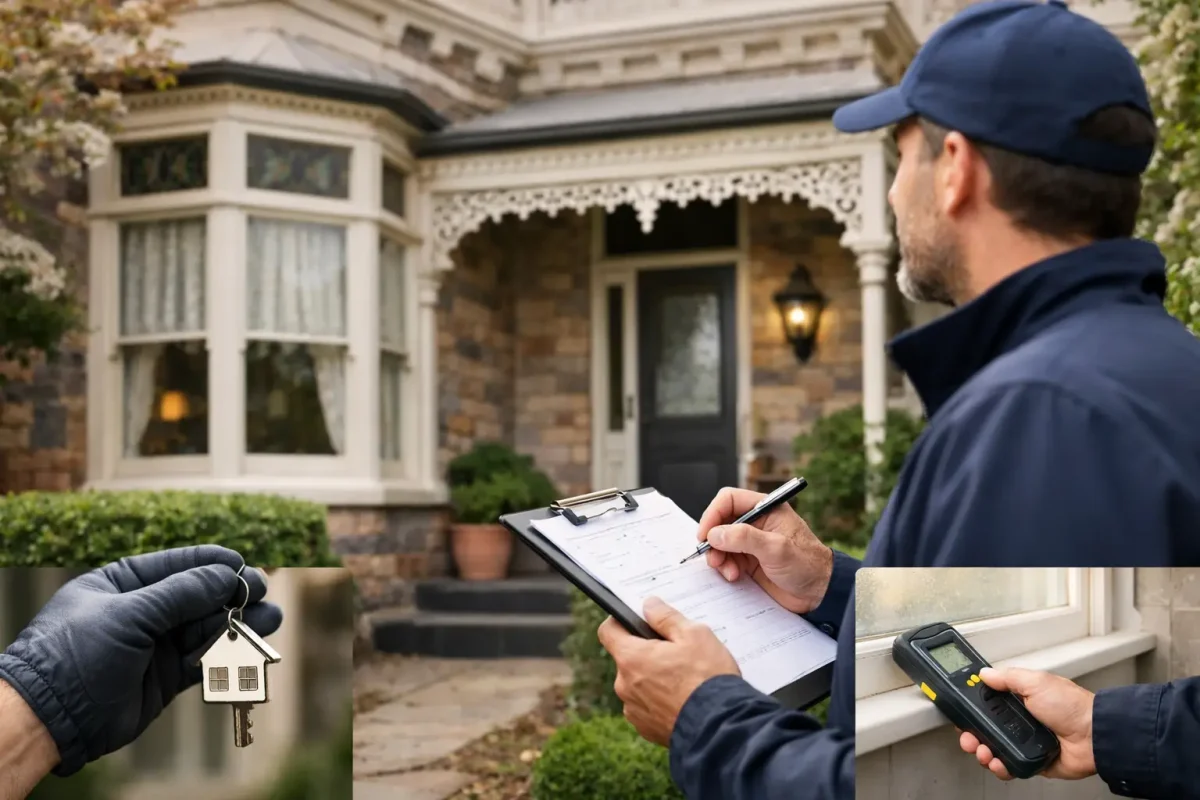
Moisture meters and thermal imaging can be particularly useful where water damage is concealed behind paint, cabinetry, wall linings, or floor finishes. Non-invasive testing helps identify areas that may require targeted repair without opening up sound materials unnecessarily.
Security, access, and external risks
External entry doors need functioning locks capable of being secured from outside. Windows that can be opened must also be capable of being secured, subject to applicable safety requirements and reasonable access considerations.
Inspection should include more than checking whether a lock turns. Loose strike plates, damaged frames, misaligned sliding doors, deteriorated hinges, and windows that will not latch properly can compromise security. Gates, steps, handrails, balconies, and decks should also be reviewed for visible instability, decay, or defects that could affect safe access.
Heating, hot water, and essential services
A rental home needs adequate fixed heating in the main living area, with the relevant energy efficiency requirements applying under Victorian rules. Portable plug-in heaters are not a substitute for compliant fixed heating. The exact solution depends on the home and its existing system, but the equipment must be functional and suitable for the space.
Hot water systems require similar scrutiny. A unit may still produce warm water while showing signs of corrosion, leakage, poor installation, or unreliable operation. Pipework, valves, visible discharge points, and accessible connections can reveal warning signs that should be investigated by a licensed trade.
Electrical safety is another area where visual evidence matters. Damaged outlets, loose switches, exposed wiring, unsuitable fittings, or an absent or non-functioning safety switch can create immediate risk. Smoke alarms must be correctly installed and operational. An inspection can identify visible concerns, while electrical testing and repairs should be performed by a qualified electrician.
Bathrooms, toilets, kitchens, and laundry facilities
Bathrooms and toilets should provide privacy, function properly, and be connected to an appropriate sewerage or wastewater system. In practical terms, an assessment may identify leaking toilets, poorly secured fixtures, damaged shower screens, unsafe flooring, failed sealant, inadequate ventilation, or water damage around wet areas.
Kitchen facilities should allow safe food preparation. Working sinks, proper drainage, adequate food preparation space, and functional cooking facilities are central considerations. If laundry facilities are provided, water connections and drainage need to be safe and operational.
Wet areas often produce the most expensive hidden defects because small failures can continue for months. A loose shower screen channel or cracked grout line is not always the cause of a leak, but it should never be dismissed without checking for moisture impact nearby.
Vermin, mold, and indoor condition
A rental property must be free from infestations of vermin. Gaps around pipes, damaged vents, subfloor access issues, roof void entry points, and poor waste storage areas can all contribute to pest activity. Evidence such as droppings, nesting material, damaged insulation, insect trails, or entry holes should be recorded and addressed.
Mold requires more than a wipe-down. Surface cleaning may improve appearance temporarily, but recurring mold commonly points to condensation, plumbing leaks, roof leaks, poor drainage, or inadequate ventilation. The right remedy depends on the cause. Repainting over a damp wall can conceal the evidence without solving the problem.
A Practical Inspection Process Before Leasing
The strongest time to assess a home is before it is advertised or immediately after a tenant vacates. Rooms are accessible, repair work can be scheduled without disrupting occupants, and there is time to obtain trade quotes before a fixed move-in date creates pressure.
A thorough assessment should document accessible areas with photographs and clear observations. It should identify visible defects, safety concerns, moisture indicators, incomplete repairs, and items requiring further investigation. Good reporting is specific: it states where the issue is, what was observed, why it matters, and what type of action is appropriate.
Owners should avoid treating the report as a simple pass-or-fail document. Some findings need immediate action, while others should be monitored, referred to a licensed specialist, or included in a planned maintenance program. For instance, a leaking roof penetration needs prompt repair, whereas minor wear to a benchtop may not affect minimum standards but can be budgeted for later.
Common Mistakes That Create Larger Problems
The most costly mistake is relying on appearance alone. Fresh paint can hide water staining, and new flooring can cover uneven subfloors or moisture damage. Another common issue is arranging repairs only after a tenant has moved in. Even a straightforward repair becomes harder when access must be coordinated and the tenant has already been living with the problem.
Owners can also lose time by sending the wrong trade first. A plumber may repair a visible leak, but a building inspection may reveal that the leak has already damaged wall linings or framing. Similarly, replacing a heater does not resolve heat loss caused by major air gaps, failed windows, or moisture-affected building elements.
Ausgun Building Inspections applies building-industry experience and diagnostic tools to help identify visible and concealed warning signs before they become expensive surprises. The purpose is practical evidence for better decisions, not vague recommendations.
A rental home should be assessed with the same care as a purchase or handover decision. Before the next tenant receives the keys, take the opportunity to identify what the property is telling you now – because small defects are easiest to resolve before they become someone else’s daily problem.