A termite problem does not need to be obvious to become expensive. Damage can sit behind plaster, beneath flooring, inside roof framing, or around damp exterior areas while a home still presents well at an open inspection. That is where termite inspection value becomes practical: it gives a buyer independent evidence before their deposit, finance approval, and repair budget are tied to the property.
For Melbourne buyers and investors, a termite inspection is not simply a box to check before settlement. It is a focused risk assessment that can reveal signs of active timber pests, previous damage, moisture conditions that attract termites, and building details that make future attack more likely. The result is clearer information for deciding whether to proceed, negotiate, obtain specialist advice, or walk away.
The real value of a termite inspection
The cost of an inspection is small compared with the uncertainty it can remove. Timber pests can affect structural framing, subfloors, decks, window frames, skirting boards, roof timbers, and concealed joinery. By the time surface damage is visible, the issue may have been present for some time.
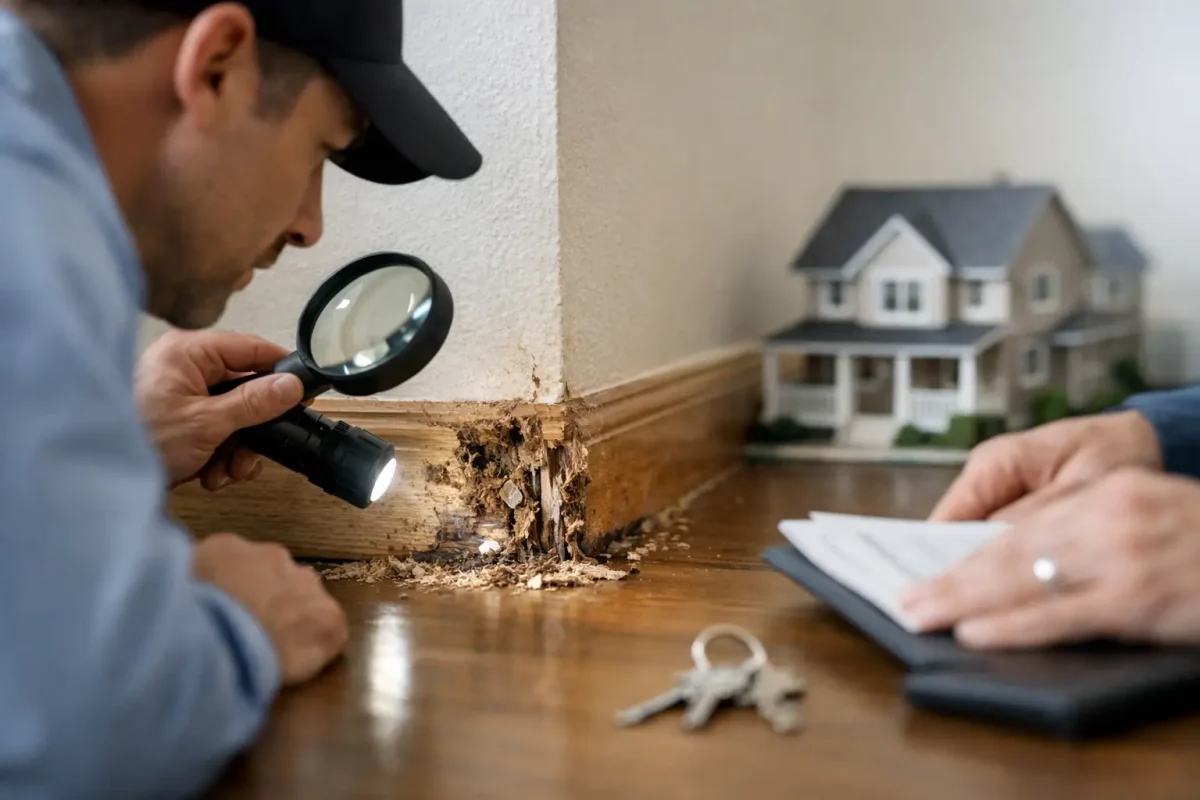
An experienced inspector looks beyond the obvious. They assess accessible areas for termite leads, mud tubes, damaged timber, hollow-sounding sections, frass where relevant, moisture entry points, poor drainage, timber-to-ground contact, and concealed conditions that deserve further investigation. Non-invasive equipment, including moisture meters, thermal imaging, and insect detection technology, can help identify abnormal conditions without opening up walls or damaging finishes.
That evidence has financial value even when no active termites are found. A report may identify a leaking shower, inadequate subfloor ventilation, blocked drainage, or untreated timber landscaping against the building. These are not proof of termite activity on their own, but they can increase risk and should be addressed as part of responsible property ownership.
What a thorough inspection can reveal
A useful termite inspection does more than state whether termites were seen on the day. It places the findings in context. Buyers need to know what was observed, where it was observed, how serious it appears, which areas could not be accessed, and what action should follow.
Active termite evidence
Active termite activity requires prompt action. Depending on the location and extent, the next step may be a targeted pest treatment assessment, further investigation of concealed areas, and repair planning after the infestation has been controlled. A buyer should understand that treatment and rectification are separate costs. Removing termites does not automatically restore damaged timber.
Past damage and repairs
Older termite damage does not always mean a current infestation. However, it does raise valuable questions: Was the source of moisture corrected? Was treatment completed? Were damaged structural members properly repaired? Is there evidence of a current termite management system? A good report helps distinguish visible historical damage from signs that warrant urgent specialist review.
Conditions that increase future risk
Termites need favorable pathways and moisture. Garden beds built too high against walls, firewood stored beside the home, leaking plumbing, poor surface drainage, and inaccessible subfloor spaces can all make inspection and prevention harder. These conditions may be manageable, but a buyer should price them into their ownership plan rather than discover them after settlement.
Hidden limitations
No visual termite inspection can see through every wall, under every floor covering, or behind stored belongings. Furniture, insulation, locked rooms, thick vegetation, finished wall linings, and restricted roof or subfloor access can limit what is visible. This is not a reason to skip the inspection. It is a reason to use an inspector who clearly records limitations so you know where residual risk remains.
Termite inspection value before a purchase decision
The greatest benefit usually comes before contracts become unconditional. If an inspection identifies significant activity, major damage, or high-risk moisture issues, the buyer has information that can materially change the decision.
In some cases, the sensible response is to request further invasive investigation or specialist pest advice. In others, documented findings may support a repair allowance or price negotiation. Where the risk, cost, or uncertainty is too high, the report can prevent a buyer from committing to a property that does not suit their budget or risk tolerance.
This is especially relevant for first-home buyers. A home can look affordable at the purchase price but become financially stressful if urgent treatment, structural repairs, drainage works, and cosmetic reinstatement are needed immediately afterward. Investors face a different version of the same issue: unplanned repairs can disrupt rental income, delay leasing, and affect returns.
The value also depends on the property. A recently built home is not automatically termite-proof, and an older weatherboard home is not automatically a poor purchase. Construction type, site drainage, surrounding vegetation, prior treatment history, access, and maintenance all matter. The aim is not to label a property as safe or unsafe in broad terms. It is to identify the evidence, understand the exposure, and make a decision with open eyes.
Why a building and pest perspective matters
Termite evidence often connects to wider building issues. Moisture may be entering through failed flashing, a leaking bathroom, damaged roof plumbing, poor grading, or defects around external cladding. Timber decay can sometimes be mistaken for insect damage, while termite damage may be obscured by paint, repairs, or finishes.
A combined building and pest assessment gives buyers a more useful picture because it considers the building systems around the risk. If a subfloor has poor ventilation, an inspector can identify both the pest implications and the maintenance or building concerns that contribute to the condition. If timber framing appears affected, the report can help clarify whether structural review or repair is likely to be required.
This approach is particularly valuable where a property has been renovated. Fresh paint and new finishes can improve presentation, but they do not prove that previous moisture or pest concerns were resolved correctly. Independent inspection protects the buyer from relying solely on appearance, seller statements, or a quick walkthrough.
Getting the most from your inspection
Book early enough that the findings can still inform your decision. A rushed inspection after key contract dates have passed may still be useful, but it gives you fewer options. Provide the inspector with any available information about previous termite treatments, known repairs, renovation work, or areas of concern.
Attend the inspection if possible. On-site explanations can help you understand the difference between an immediate issue, a maintenance item, and a limitation that needs follow-up. If you cannot attend, ask for a report with clear photographs, plain-English observations, and practical recommendations rather than vague statements.
It is also worth reading the access limitations carefully. If a roof void, subfloor, garage, or section of the home was inaccessible, ask what that means for the level of confidence in the result. Sometimes clearing stored goods or arranging access for a follow-up inspection is a sensible step before committing to the purchase.
When an inspection does not find termites
A clear inspection result is reassuring, but it should not be treated as a lifetime guarantee. Termites can enter after the inspection, and concealed areas can remain outside the scope of a non-invasive visual assessment. Ongoing prevention still matters.
After purchase, maintain drainage, repair leaks promptly, keep soil and garden materials below weep holes where applicable, avoid timber contact with the ground, and arrange periodic professional inspections appropriate to the property and local conditions. Retaining treatment records and inspection reports also creates a more useful maintenance history for future owners.
For buyers considering a property in Melbourne or regional Victoria, Ausgun Building Inspections brings building experience and diagnostic tools to the question that matters most: what is actually present, what cannot be confirmed, and what could it cost you if ignored? A well-timed termite inspection will not make the purchase decision for you, but it can make sure the decision is based on evidence rather than optimism.
Before you sign away your negotiating power, give the property a chance to tell the full story.