Buying a home is one of the biggest financial investments you will make. Whether you are purchasing your first home, upgrading to a larger property or investing in Melbourne’s property market, understanding the building’s condition before buying is essential.
A property may look perfect during an open inspection, but hidden defects such as structural movement, roof damage, moisture problems and deteriorated timber can result in expensive repairs.
This is where a pre-purchase building inspection in Melbourne becomes valuable.
At Ausgun Building Inspections, we help property buyers identify visible building defects and understand potential maintenance and repair requirements before making important purchasing decisions.
1. What Is a Pre-Purchase Building Inspection?
A pre-purchase building inspection is a professional visual assessment of a property’s condition, generally conducted before the purchase becomes unconditional.
The purpose is to identify significant defects, safety hazards and other visible building issues that may affect the property’s condition.
In Australia, pre-purchase residential building inspections are commonly carried out with reference to AS 4349.1 – Inspection of Buildings: Pre-Purchase Inspections – Residential Buildings.
A typical inspection assesses accessible areas of the building, including the interior, exterior, roof space, subfloor and surrounding structures, subject to the agreed inspection scope and access limitations.
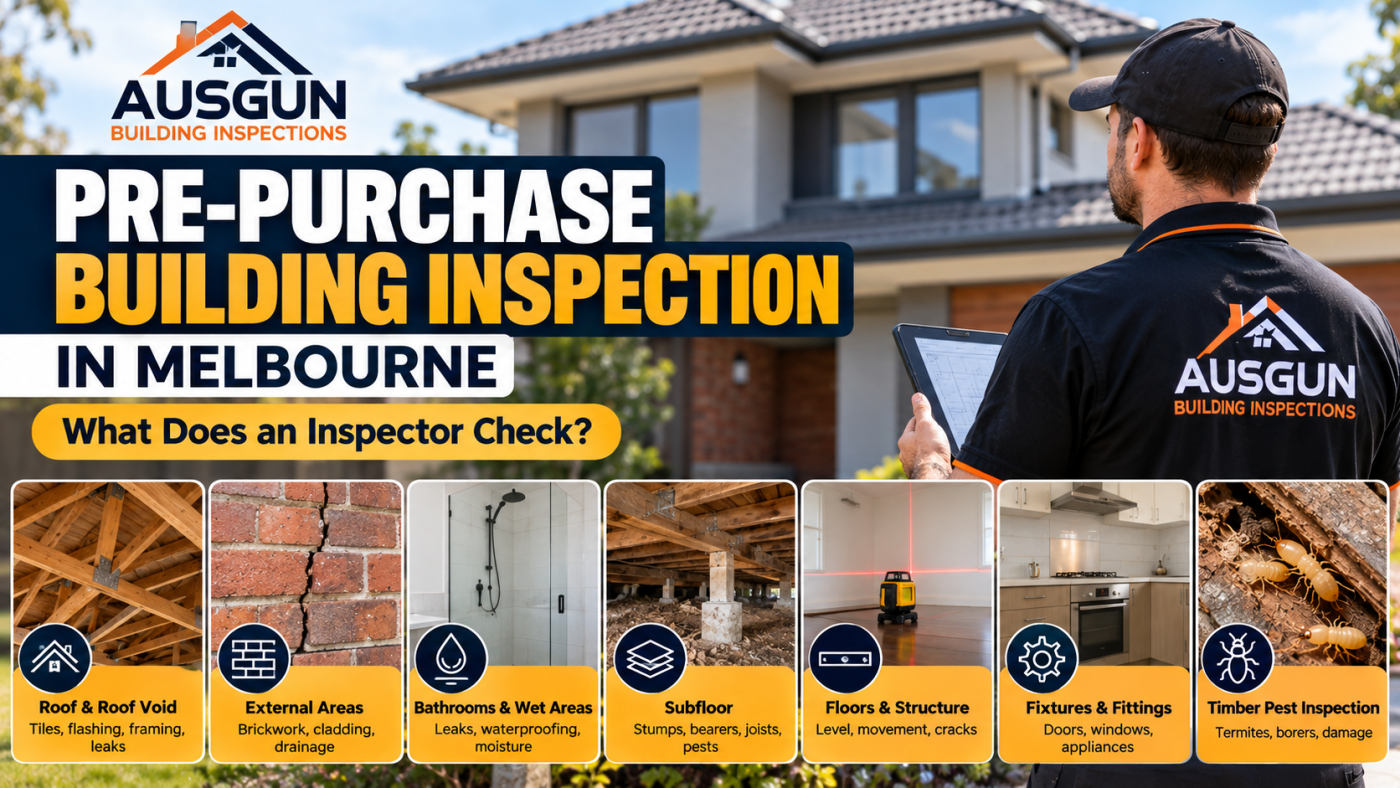
2. Roof Exterior and Roof Void Inspection
The roof is one of the most important components of a property because it protects the building from weather exposure.
During an inspection, the inspector may assess:
- Cracked or damaged roof tiles
- Deteriorated roof mortar and pointing
- Rusted or damaged roof sheets
- Defective roof flashing
- Blocked or damaged gutters
- Visible roof framing defects
- Deteriorated roof timbers
- Evidence of previous roof leakage
Where safe access is available, the roof void may also be inspected for visible damage to trusses, rafters, underpurlins and other structural timber elements.
Common finding: Deteriorated roof mortar and cracked roof tiles can allow water to penetrate the roof, potentially causing moisture damage to ceilings and timber framing.
3. External Walls and Brickwork
External walls protect the property from weather and contribute to its structural performance.
An inspector assesses visible defects such as:
- Cracks in brickwork
- Separation between adjoining walls
- Deteriorated mortar joints
- Damaged or deteriorated cladding
- Gaps around windows and doors
- Signs of foundation movement
- Moisture-related deterioration
Not all cracks are structural defects. However, significant cracking, wall separation or evidence of ongoing movement may require assessment by a structural engineer.
Common finding: Stepped cracking in brick walls, particularly around doors and windows, may indicate foundation settlement or other building movement.
4. Floors, Foundations and Structural Movement
Uneven floors and building movement are common concerns, particularly in older Melbourne homes.
Where appropriate, an inspector may use laser levelling equipment to assess floor deviations.
Common defects include:
- Uneven or sloping floors
- Deteriorated timber stumps
- Cracked concrete slabs
- Movement between walls and floors
- Damaged bearers and floor joists
- Signs of settlement
Significant floor deviations do not automatically confirm structural failure. However, they may indicate underlying movement requiring further investigation.
Common finding: A noticeable floor slope accompanied by wall cracking and sticking doors may suggest foundation movement.
5. Bathrooms, Showers and Moisture Detection
Bathrooms and other wet areas are common locations for moisture-related defects.
An inspector checks accessible surfaces and surrounding areas for signs of water leakage and deterioration.
Common issues include:
- Cracked shower bases
- Deteriorated grout and silicone
- Loose or cracked tiles
- Moisture damage to adjoining walls
- Deteriorated bathroom cabinetry
- Signs of failed waterproofing
- Visible plumbing leaks
Moisture meters and thermal imaging cameras may be used where appropriate to assist in identifying areas requiring further investigation.
However, elevated moisture readings alone do not confirm the exact source of a leak or prove that waterproofing has failed.
Common finding: High moisture readings along skirting boards outside a shower may indicate water escaping from the shower area.
6. Subfloor Inspection
The subfloor supports the building and can reveal important defects that are not visible from inside the house.
Where safe access is available, the inspector may assess:
- Timber stumps and bearers
- Floor joists
- Timber decay and deterioration
- Visible pest-related damage
- Dampness and poor drainage
- Inadequate ventilation
- Signs of movement or settlement
Subfloor moisture can contribute to timber deterioration and create conditions conducive to timber pest activity.
Common finding: Rotten timber bearers or leaning stumps may require repairs or further structural assessment.
7. Doors, Windows and Internal Areas
Internal inspection helps identify visible defects and problems affecting the building’s condition and operation.
Areas commonly assessed include:
- Internal walls and ceilings
- Doors and door frames
- Windows and window frames
- Visible floor finishes
- Cracks and separation
- Water stains
- Damaged or deteriorated fixtures
- Signs of building movement
Sticking doors and windows may result from ordinary wear, installation issues or building movement.
Common finding: A door rubbing against its frame, combined with nearby wall cracking, may warrant further investigation.
8. Kitchen and Laundry Areas
Kitchens and laundries contain plumbing fixtures and cabinetry that may be affected by water leakage.
Common visible defects include:
- Moisture-damaged cabinets
- Leaking taps and exposed pipework
- Deteriorated silicone seals
- Damaged benchtops
- Cracked tiles
- Signs of previous leakage
- Poor drainage or plumbing concerns
Where plumbing or electrical defects are suspected, further assessment by a licensed tradesperson may be recommended.
9. External Structures and Drainage
A building inspection may also include accessible external structures and surrounding areas within the agreed scope.
These can include:
- Garages and carports
- Pergolas and verandahs
- Balconies and decks
- Retaining walls
- Concrete pathways
- Surface drainage
- Gutters and downpipes
Poor drainage around a building can contribute to moisture problems and foundation movement.
Common finding: A disconnected downpipe discharging water beside the foundations may contribute to localised soil moisture changes and building movement.
10. Does a Building Inspection Include Termite Inspection?
A standard pre-purchase building inspection does not replace a dedicated timber pest inspection.
A timber pest inspection is generally carried out with reference to AS 4349.3 – Inspection of Buildings: Timber Pest Inspections.
It focuses on evidence of timber pest activity, damage and conditions conducive to attack.
Timber pests can include termites and timber borers.
For better protection, buyers should consider arranging a combined building and timber pest inspection.
11. What Happens After the Inspection?
Following the inspection, the buyer receives a report outlining the inspector’s findings.
Depending on the scope, the report may identify:
- Major defects
- Minor defects
- Safety hazards
- Maintenance concerns
- Areas requiring further investigation
- Access limitations and areas not inspected
Where significant defects are identified, buyers may need to obtain specialist assessments or repair quotations before proceeding.
A building inspection is not a guarantee that the property is free from defects, and concealed or inaccessible issues may remain undetected.
12. When Should You Book a Pre-Purchase Building Inspection?
The ideal time is before the property purchase becomes unconditional.
For private sales, buyers should discuss appropriate building inspection conditions with their conveyancer or legal representative.
For auction properties, an inspection should generally be arranged before auction day.
Booking early provides time to review the findings and investigate any significant concerns.
Why Choose Ausgun Building Inspections?
Ausgun Building Inspections provides professional inspection services across Melbourne and regional Victoria.
Our team helps buyers understand the visible condition of residential properties through clear reporting and practical recommendations.
We provide:
- Pre-Purchase Building Inspections
- Combined Building and Pest Inspections
- Timber Pest Inspections
- Construction Stage Inspections
- Pre-Settlement and PCI Inspections
- Rental Minimum Standards Inspections
- Section 137B Owner Builder Reports
Our inspectors use suitable inspection equipment, including moisture meters, thermal imaging cameras and laser levelling tools, where appropriate.
Book Your Pre-Purchase Building Inspection in Melbourne
Before purchasing your next property, make sure you understand its condition.
A professional inspection can help identify defects, highlight potential repair requirements and support more informed purchasing decisions.
Don’t Buy Before You Inspect!
Contact Ausgun Building Inspections to request a quotation or book your inspection.
Website: https://ausgunbuildinginspections.com.au/
Your Property, Our Priority.