
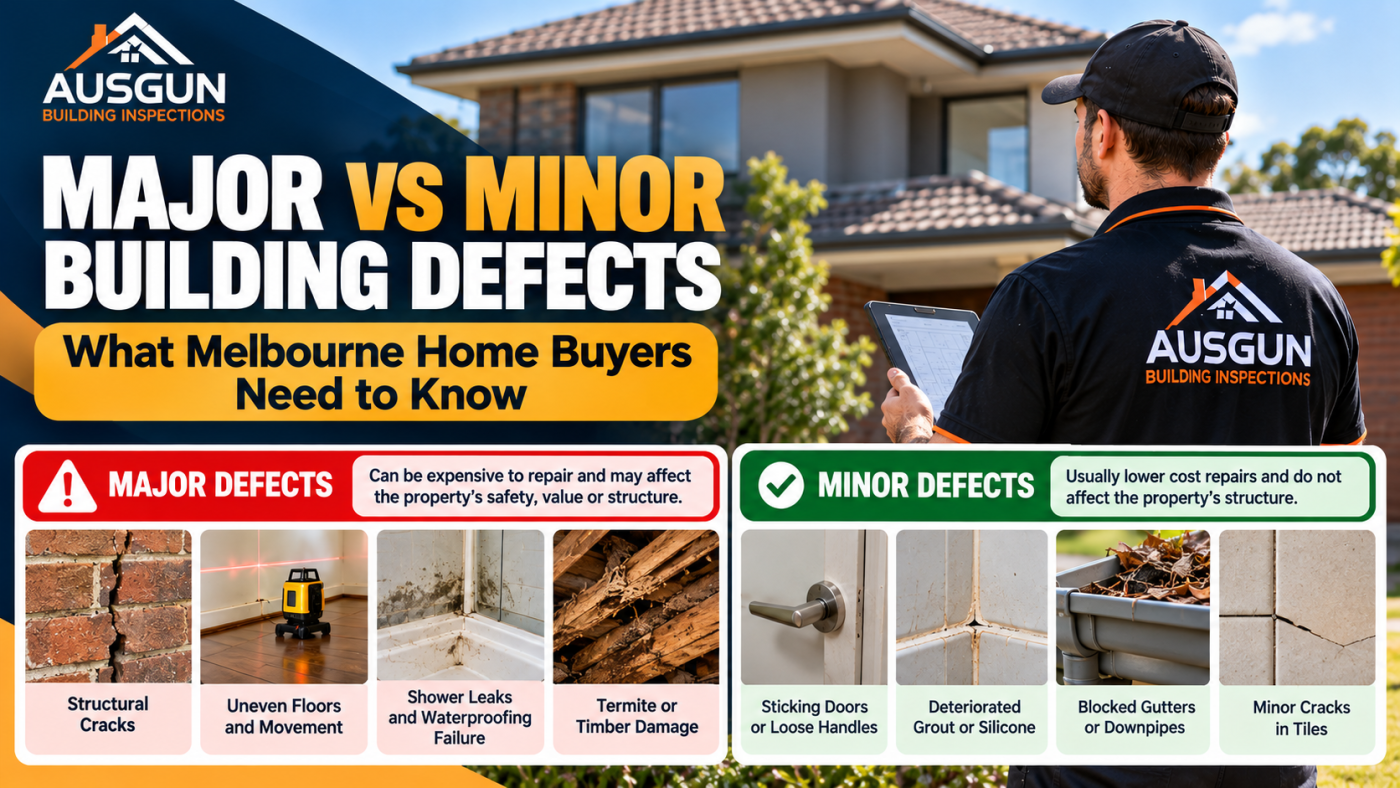
When purchasing a property in Melbourne, one of the most important things to understand is the difference between major and minor building defects.
A property inspection report may identify several issues, ranging from small maintenance concerns to serious structural problems. However, not every defect should be treated equally.
Some defects may require simple repairs, while others can involve significant costs and specialist investigations.
At Ausgun Building Inspections, we regularly identify structural movement, moisture damage, roof deterioration and other building defects during pre-purchase inspections across Melbourne and regional Victoria.
Understanding the difference between major and minor defects can help buyers make informed decisions before purchasing a property.
1. What Is a Major Building Defect?
A major building defect is generally a significant problem that affects, or is likely to affect, the building’s structural integrity, safety or function.
Under the principles of AS 4349.1, major defects are assessed according to their nature, severity and potential consequences.
Major defects may involve structural failure, significant deterioration or conditions requiring substantial repairs.
Examples of potentially major building defects include:
- Significant structural cracking
- Major foundation movement
- Severely deteriorated structural timber
- Significant roof framing damage
- Serious water penetration affecting building elements
- Structural damage caused by timber pests
- Unstable balconies or supporting structures
The classification depends on the circumstances of each property and the inspector’s assessment.
2. What Is a Minor Building Defect?
A minor defect is generally an issue that does not meet the threshold for classification as a major defect.
Minor defects often involve maintenance, wear and tear or localised deterioration.
Common examples include:
- Loose door handles
- Minor plaster cracks
- Deteriorated silicone
- Localised grout deterioration
- Minor tile damage
- Doors requiring adjustment
- Damaged window winders
- Minor cosmetic defects
Although these issues may be classified as minor, they should not always be ignored.
For example, deteriorated silicone around a shower may appear to be a small maintenance issue, but ongoing water penetration can eventually cause more significant damage.
3. Structural Cracks in Brick Walls
Cracking in brickwork is one of the most common concerns raised by home buyers.
Small cracks may result from normal building movement, thermal expansion or minor settlement.
However, wider cracks, stepped cracking or separation between adjoining walls may indicate more significant structural movement.
Warning signs include:
- Wide or progressively increasing cracks
- Separation between brick walls
- Cracks around windows and doors
- Uneven floors
- Doors and windows becoming difficult to operate
Significant cracking should be investigated by a qualified structural engineer to determine the cause and appropriate repair requirements.
4. Uneven Floors and Foundation Movement
Uneven floors can occur in both older and newer properties.
Possible causes include foundation settlement, deteriorated stumps, soil movement and structural deflection.
During an inspection, laser levelling equipment may be used to assess floor deviations.
A noticeable floor deviation does not automatically mean the property has a major structural defect. The inspector must consider the building’s age, construction type, associated cracking and other evidence of movement.
Where significant movement is suspected, further assessment by a structural engineer may be recommended.
Repairs could involve re-levelling, replacing deteriorated stumps or other structural works, depending on the cause.
5. Shower Leaks and Waterproofing Defects
Shower leakage is a common problem identified during residential building inspections.
Typical signs include:
- Deteriorated grout and silicone
- Cracked shower bases
- Loose or cracked tiles
- Elevated moisture readings
- Water damage to adjoining walls
- Swollen skirting boards
- Deteriorated cabinetry
A small area of deteriorated silicone may be a minor maintenance issue.
However, extensive moisture damage affecting surrounding building materials may indicate a more serious problem.
A qualified tradesperson should investigate the source of leakage and recommend appropriate repairs.
6. Roof Defects and Water Penetration
Roof defects can range from minor maintenance issues to significant structural concerns.
Examples of relatively minor roof issues may include isolated cracked tiles or localised mortar deterioration.
More serious defects may include:
- Damaged structural roof framing
- Significant roof sagging
- Extensive corrosion of roofing materials
- Widespread water penetration
- Severely deteriorated structural timbers
Roof defects should be addressed promptly because continued water penetration can cause further damage to ceilings, insulation and structural components.
7. Timber Pest Damage
Timber pest damage can affect the strength and condition of timber structures.
Termites and timber borers may damage floor joists, bearers, roof framing and other timber components.
The severity depends on the extent of damage and whether structural performance has been affected.
Significant timber pest damage may require further assessment by a qualified timber pest specialist, builder or structural engineer.
A dedicated timber pest inspection is recommended when purchasing a property because a standard building inspection does not replace a timber pest assessment.
8. Can Minor Defects Become Major Problems?
Yes. Some defects that initially appear minor can develop into more serious issues if left unattended.
For example:
Deteriorated shower silicone: Continued water penetration may cause concealed moisture damage.
Blocked gutters: Overflowing water may damage eaves, fascia boards and surrounding building materials.
Minor roof leaks: Ongoing leakage may eventually damage ceilings and timber framing.
Poor surface drainage: Water accumulation around foundations may contribute to soil movement.
Regular maintenance and timely repairs can help prevent minor problems from becoming more expensive.
9. Should You Buy a House With Major Defects?
Finding a major defect does not automatically mean you should abandon the purchase.
However, buyers should understand the nature of the defect, the likely repair costs and the potential risks before proceeding.
Recommended steps include:
- Review the building inspection report carefully.
- Seek specialist advice where recommended.
- Obtain written quotations for significant repairs.
- Discuss the findings with your conveyancer or legal representative.
- Consider the property’s overall condition and purchase price.
Some defects may be repairable at a reasonable cost, while others can involve extensive structural works.
A professional inspection report provides valuable information to support your decision.
10. Can Major Defects Help You Negotiate the Purchase Price?
Major defects may provide a basis for discussing the purchase price with the seller.
For example, if an inspection identifies significant foundation movement or serious roof damage, the buyer may obtain repair quotations and request a price adjustment.
However, negotiations depend on the contract terms, the seller’s agreement and the circumstances of the sale.
Buyers should obtain legal advice before relying on an inspection condition or attempting to withdraw from a contract.
11. Why Is a Pre-Purchase Building Inspection Important?
A professional building inspection helps buyers understand the visible condition of a property before making a major financial commitment.
An inspection can identify:
- Major building defects
- Minor building defects
- Safety hazards
- Maintenance concerns
- Evidence of moisture damage
- Structural movement
- Areas requiring specialist investigation
Inspections are generally visual and non-invasive, so concealed defects and inaccessible areas may not be identified.
Understanding these limitations is important when reviewing the report.
Why Choose Ausgun Building Inspections?
At Ausgun Building Inspections, we provide professional inspection services across Melbourne and regional Victoria.
Our team helps buyers identify visible building defects and understand the potential implications of inspection findings.
Our services include:
- Pre-Purchase Building Inspections
- Combined Building and Pest Inspections
- Timber Pest Inspections
- Construction Stage Inspections
- Pre-Settlement and PCI Inspections
- Section 137B Owner Builder Reports
- Rental Minimum Standards Inspections
We use appropriate inspection equipment, including moisture meters, thermal imaging cameras and laser levelling tools, where required.
Book Your Building Inspection in Melbourne
Before buying your next property, make sure you understand its condition.
Whether you are purchasing an older home, a newly constructed house or an investment property, a professional building inspection can help identify significant concerns before you commit.
Don’t Buy Before You Inspect!
Contact Ausgun Building Inspections today to arrange your inspection.
Website: https://ausgunbuildinginspections.com.au/
Your Property, Our Priority.