
High moisture readings are one of the most common issues found during building inspections across Melbourne.
A wall, ceiling or floor can sometimes look completely normal while a moisture meter detects elevated moisture behind or within the building material.
For property buyers, this can be an important warning sign because ongoing moisture may lead to damage to plaster, skirting boards, flooring, cabinetry and timber components.
At Ausgun Building Inspections, moisture readings are assessed together with the surrounding condition of the property to determine whether further investigation or repairs may be required.
What Is a High Moisture Reading?
During a building inspection, professional moisture detection equipment may be used where leakage, dampness or water entry is suspected.
A high moisture reading does not automatically mean there is a major defect.
The inspector will usually consider:
- Where the moisture is located
- The type of building material
- Visible water staining
- Cracked grout or silicone
- Nearby plumbing fixtures
- Roof and external wall conditions
- Previous signs of leakage
- Moisture readings in surrounding areas
For example, elevated moisture beside a shower may indicate a wet-area issue, while moisture detected on a ceiling may be related to roof or plumbing leakage.
The important question is not only whether moisture is present, but where it is coming from.
Bathrooms and Showers Are Common Problem Areas
Bathrooms are one of the most common areas where elevated moisture is detected during property inspections.
Possible causes can include:
- Deteriorated grout
- Failed silicone
- Cracked tiles
- Shower screen leakage
- Plumbing leaks
- Waterproofing defects
- Poor sealing around plumbing penetrations
A shower may look clean and well maintained while moisture is escaping into the surrounding wall or floor.
During our Melbourne building inspections, we regularly identify elevated moisture readings to walls beside or behind shower areas.
If the problem remains unresolved, ongoing moisture can eventually contribute to damaged plaster, rotting skirting boards, flooring deterioration and timber damage.
Moisture Can Come From the Roof or External Walls
Not all moisture problems start in bathrooms.
Water can also enter a property through the roof, gutters, external walls, windows or doors.
Common causes can include:
- Broken or displaced roof tiles
- Deteriorated roof mortar
- Defective roof flashing
- Blocked gutters
- Overflowing downpipes
- Cracked render
- Gaps around windows and doors
- Poorly sealed wall penetrations
Sometimes moisture detected inside the house is actually caused by a defect located outside.
For this reason, the inspector should also consider the surrounding roof and external building areas when investigating the source.
What About Previous Water Damage?
Sometimes water staining is visible from an old leak that has already been repaired.
However, if elevated moisture is still detected, the area may not have fully dried or the original problem may still be active.
This is why a visual inspection alone may not always provide the full picture.
A moisture meter can help the inspector compare the affected area with surrounding materials.
If the source cannot be confirmed during the inspection, further investigation by a qualified plumber, roof plumber or builder may be recommended.
When Does Moisture Become a Serious Concern?
Not every moisture reading means major structural damage.
However, ongoing moisture should not be ignored.
Long-term moisture can contribute to:
- Plaster deterioration
- Timber decay
- Damaged skirting boards
- Swollen cabinetry
- Flooring damage
- Mould growth
- Corrosion
- Increased timber pest risk
Where timber structural components remain exposed to moisture for a long period, repair costs can become much more significant.
The seriousness of the issue depends on the source, duration and extent of the moisture.
Can Moisture Increase Termite Risk?
Excess moisture can create conditions that are more favourable for termite activity.
Termites require moisture to survive, which means leaking plumbing, poor drainage, roof leaks and damp subfloor areas may increase the risk around a property.
This does not mean that every high moisture reading indicates termites.
However, moisture conditions and timber pest risks are often considered together during a building and pest inspection.
Reducing unnecessary moisture around a property is an important part of protecting the building.
Real Inspection Example
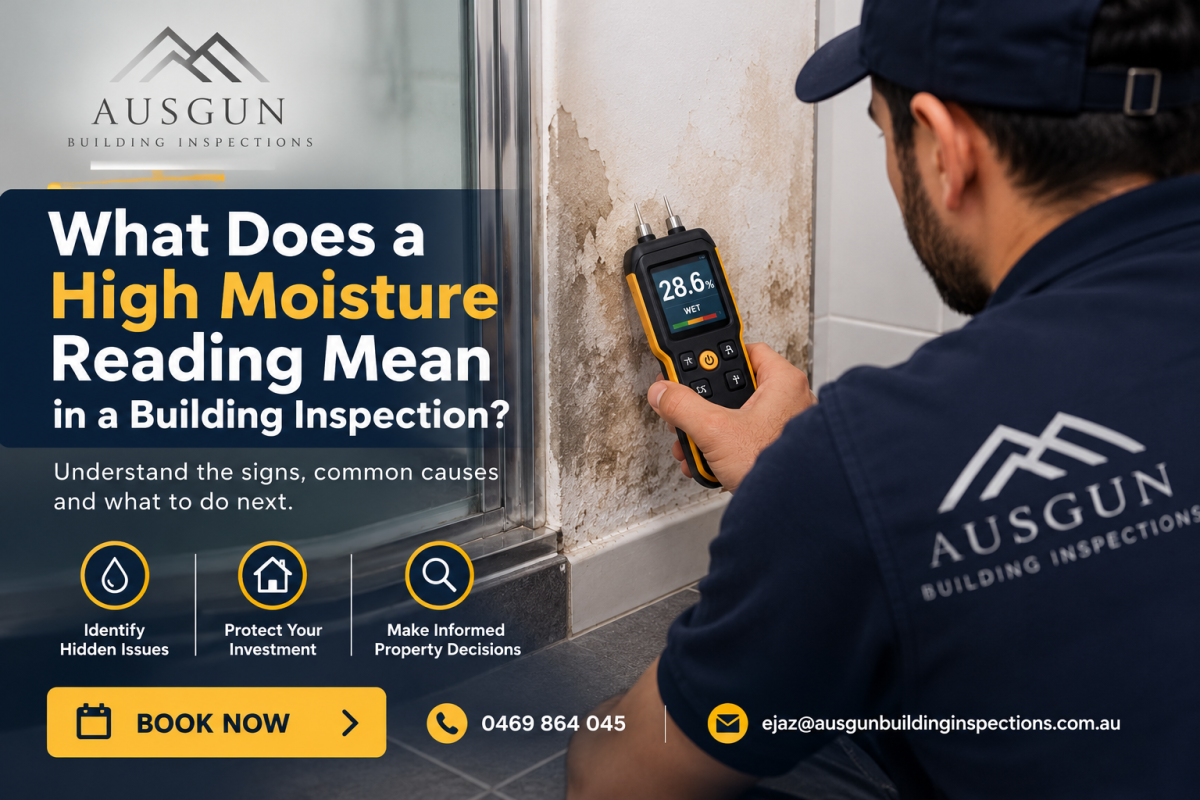
A common example we see during inspections is elevated moisture around the wall adjoining a shower.
The shower may also have:
- Deteriorated grout
- Cracked silicone
- Loose tiles
- Minor gaps around the shower screen
From a normal visual inspection, the bathroom may still appear to be in reasonable condition.
However, the moisture meter may indicate that water is escaping beyond the shower area.
Depending on the condition found, repairs may involve re-grouting, re-sealing, plumbing repairs or further investigation of the waterproofing system.
Another common example is moisture detected to a ceiling or wall near an external door or roof area.
This may be related to defective flashing, overflowing gutters, roof leakage or water entering through gaps in external building elements.
What Should a Buyer Do if High Moisture Is Found?
If your building inspection identifies elevated moisture, there is no need to immediately assume the worst.
The important questions are:
- Where is the moisture coming from?
- Is the problem currently active?
- How large is the affected area?
- Is there visible damage?
- Has timber been affected?
- Is further investigation required?
- What repairs may be needed?
If the issue appears significant, buyers may wish to obtain further specialist advice or repair quotations before finalising the purchase.
You should also discuss relevant building inspection findings with your conveyancer or solicitor where necessary.
Why Moisture Detection Matters During a Building Inspection
Many moisture-related problems can begin before visible damage becomes obvious.
Professional moisture detection equipment can provide additional information that may not be available through visual inspection alone.
At Ausgun Building Inspections, moisture readings are considered together with the visible condition of the property and surrounding defects.
The purpose is not simply to record a number on a moisture meter.
The aim is to determine whether the reading may indicate a building defect that requires further attention.
Book a Building & Pest Inspection in Melbourne
Buying a home or investment property?
Moisture problems can be difficult to identify during a short open inspection and may lead to expensive repairs if left unresolved.
Ausgun Building Inspections provides professional building and pest inspections across Melbourne and Victoria.
Our inspections can help identify:
- Moisture concerns
- Structural defects
- Roof problems
- Timber pest risks
- Wet-area defects
- Drainage problems
- General building defects
Book your building and pest inspection before you commit to the property.
Call Now: 0469 864 045
Email: ejaz@ausgunbuildinginspections.com.au