
A wall can look freshly painted, straight, and well finished while moisture is tracking behind the cladding, timber framing is deteriorating, or critical flashings have been omitted. Cladding defects are often difficult for buyers to spot during a short open inspection, yet they can lead to expensive repairs, insurance concerns, and disputes after settlement.
External cladding is not simply a finish. It is part of the building envelope: the system that helps keep rain out, manages moisture, protects framing, and contributes to fire performance. When one part of that system is poorly designed, installed, or maintained, the damage may develop slowly and remain hidden until it becomes a major issue.
Why cladding defects deserve close attention
Water follows gravity, wind pressure, gaps, and weak points. It can enter through an unsealed joint, a poorly installed window flashing, a crack near a penetration, or an incorrectly terminated roof-to-wall junction. Once inside the wall, it may wet insulation, framing, plasterboard, and floor structures without producing immediate visible signs indoors.
This is why a small external defect should not be dismissed as cosmetic. A loose board may only require refastening. But staining below a window, swelling around sheet joints, or deterioration at the base of a wall can indicate a broader moisture-management failure. The correct response depends on the evidence, the cladding type, the age of the building, and where the defect is located.
For purchasers, the financial risk is not limited to repair costs. Significant facade problems can affect negotiations, lender and insurer requirements, resale confidence, and the time needed to coordinate further investigations. For new-build owners, identifying defects before handover provides a clearer path to having the builder rectify work while contractual obligations are still active.
Common cladding defects found during inspections
Cracked, damaged, or deteriorated cladding
Cracks in fiber-cement sheets, render, masonry veneer finishes, or composite panels can allow water into areas that should remain protected. Some cracking is superficial, particularly in render, but the location and pattern matter. Cracks radiating from windows, doors, or corners may point to movement, inadequate control joints, poor installation, or insufficient support behind the cladding.
Inspectors also look for chipped edges, impact damage, delamination, corroded components, and boards that have warped or pulled away from the wall. These conditions may expose the underlying structure to weather or indicate that moisture has already affected the material.
Missing flashings and poor junction details
Most serious water-entry issues begin at transitions rather than in the middle of a wall. Roof-to-wall intersections, windows, doors, balconies, parapets, retaining walls, and plumbing penetrations all need correctly installed flashings and weatherproofing details.
A flashing that is missing, too short, incorrectly lapped, or concealed behind an unsuitable finish can direct water into the wall rather than out of it. At ground level, cladding installed too close to paving, soil, or garden beds may wick moisture or be exposed to splashback. These are details a buyer may overlook because they are low, high, or partly concealed.
Open joints, failed sealants, and unsealed penetrations
Sealant has a limited service life. It can shrink, crack, separate from surfaces, or be applied over dirty or incompatible materials. Gaps around windows, external pipes, meter boxes, vents, and cables are common entry points for water and pests.
Not every open joint requires a major repair. In some cladding systems, joints are designed to allow movement or drainage. The concern is whether the opening is consistent with the intended system and whether the weather-resistive layer behind it is protected. An experienced inspection considers the entire detail, not just whether a visible gap exists.
Inadequate drainage and clearance
Many wall systems rely on a cavity or drainage plane behind the visible cladding. If this space is blocked by mortar, debris, insulation, or incorrect installation, moisture may not escape. Water can then remain against framing or sheathing for extended periods.
Poor clearance is another recurring issue. Cladding should not be buried by landscaping, bridged by paving, or terminated where water can pool against the wall. Decks and balconies require particular care because their junctions can be hard to inspect and expensive to open up later.
Loose fixings, rust stains, and movement
Nails, screws, clips, and brackets must suit the cladding material and exposure conditions. Loose fixings can allow sheets or boards to move in wind, while incompatible or corroding fixings can produce rust stains, cracking, and long-term loss of support.
Uneven lines, bulging sections, visible fastener heads where they should be concealed, and repeated patch repairs may indicate workmanship concerns. They do not automatically prove structural failure, but they justify closer assessment before a purchase or final construction payment.
Fire-related cladding concerns need specialist advice
The term cladding can also raise concerns about combustible facade materials, particularly aluminum composite panels and certain other external wall products. Visual inspection alone cannot confirm a panel’s composition, fire performance, or compliance with current requirements. A panel may look similar to another product while having a very different core material and risk profile.
If combustible cladding is suspected, the next step may involve reviewing building records, product information, permits, owners corporation documents, previous fire-safety assessments, or obtaining advice from a qualified fire engineer or facade specialist. This is especially relevant for apartments, mixed-use buildings, and commercial properties.
A building inspection can identify visible indicators and document concerns, but it should not be presented as a combustible-cladding certification unless that specific specialist service has been commissioned. Clear boundaries matter because buyers need reliable advice, not false reassurance.
What a pre-purchase inspection can reveal
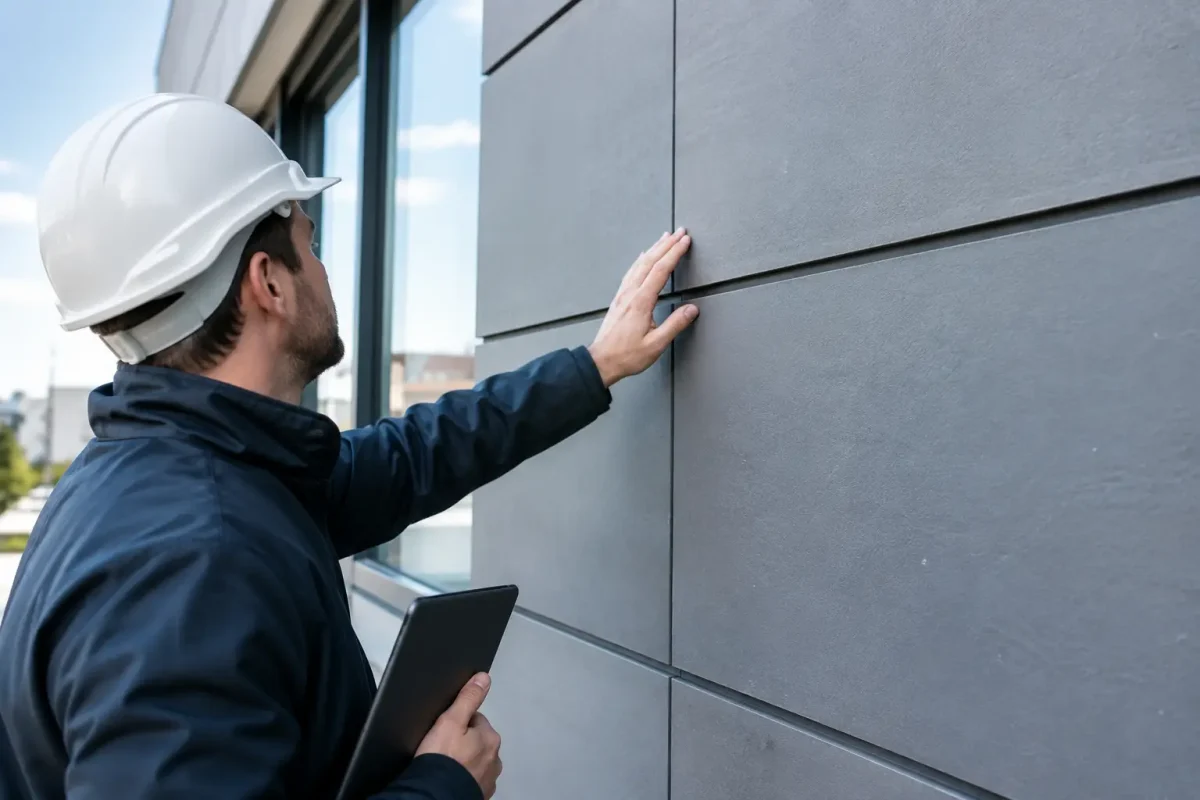
A thorough inspection looks beyond the facade’s appearance. It assesses accessible areas for damage, deterioration, defective flashings, inadequate clearances, visible moisture patterns, poor workmanship, and signs that water may be affecting adjacent building elements.
Moisture meters and thermal imaging can assist where there are signs of concealed moisture, although neither tool can see through every wall or replace invasive testing. Readings must be interpreted in context. A high moisture reading near a wet area, for example, may have a different cause than a similar reading below a window.
Access also matters. Roof edges, upper stories, concealed cavities, areas behind stored items, and wall sections close to neighboring buildings may not be visible during a standard inspection. Where the observed evidence suggests a material concern, a report should recommend further investigation rather than guessing at the full extent of damage.
Ausgun Building Inspections uses photographic evidence and practical explanations to help clients understand what was observed, what cannot be confirmed without further work, and what should be addressed before they commit funds.
Questions to ask before you proceed
If cladding concerns appear in an inspection report, ask whether the issue is localized or likely to affect a larger section of wall. Ask what is visible, what is concealed, whether moisture testing identified abnormal readings, and whether a specialist assessment or invasive investigation is warranted.
For a new home, confirm that defects are documented before handover and that rectification is completed to an acceptable standard. Do not rely solely on a verbal promise that an item will be fixed later. Photographs, written defect lists, and a reinspection can reduce uncertainty.
For an existing property, consider the likely repair pathway. Replacing a small damaged board is very different from removing cladding to repair wet framing, rectify flashing details, and reinstate finishes. A building professional may need to inspect the affected area once opened to establish the true scope of work.
The most useful inspection outcome is not a long list of technical terms. It is clear evidence that helps you decide whether to negotiate, seek specialist advice, request repairs, or proceed with confidence. When the walls protecting your investment may be compromised, early scrutiny is usually far less costly than discovering the problem after settlement.