
A fresh coat of paint, clean floors, and a well-staged living room can make a property feel move-in ready. They cannot tell you whether termites have been working behind a wall, below a floor, or inside a roof frame. Knowing how to assess termite risk before you buy helps you look past presentation and focus on the conditions that can lead to expensive hidden damage.
Termite risk is not determined by a home’s age alone. New homes, renovated properties, and established homes can all be vulnerable when moisture, concealed access, timber, and missed maintenance come together. The aim is not to diagnose an infestation during an open inspection. It is to identify warning signs, understand the property’s exposure, and know when an independent timber pest inspection is needed before your contract deadline passes.
How to Assess Termite Risk at a Property
Start by assessing the property as a system rather than looking for one dramatic sign. Termites need food, moisture, and a protected path into the building. A property becomes more vulnerable when it provides all three.
Consider the site and surrounding conditions
The land around the home matters. Mature trees, garden beds against exterior walls, stacked timber, old stumps, timber retaining walls, and dense vegetation can all create favorable termite habitat or conceal entry points. This does not mean every home with a garden has termites. It means the garden and external structures should be considered part of the risk picture.
Pay close attention to where soil, mulch, paving, or garden beds sit against the building. Termites often travel through concealed routes from the ground into structural timber. When the slab edge, brickwork, weep holes, or subfloor vents are buried or blocked, visual inspection becomes harder and moisture may be trapped against the structure.
In Melbourne and regional Victoria, seasonal rain, drainage issues, and older housing stock can increase the importance of checking the ground around a property. A low-lying block or a yard that holds water after rain deserves closer attention, particularly if water drains toward the home.
Trace moisture before looking for damage
Persistent moisture is one of the most useful indicators of termite-conducive conditions. Look for overflowing gutters, leaking downpipes, poor surface drainage, damp soil around the perimeter, leaking taps, shower recess issues, roof leaks, and plumbing leaks below sinks or within cabinetry.
Inside, a musty odor, swollen skirting boards, peeling paint, stained ceilings, or soft flooring can point to moisture. Those signs do not automatically mean termites. They may indicate a leak, rot, poor ventilation, or building movement. However, unresolved moisture creates the kind of environment termites favor and can also make concealed damage harder to distinguish.
A professional inspector may use a moisture meter and thermal imaging to investigate areas that cannot be judged reliably by sight. These tools do not replace physical inspection, but they can help direct attention to abnormal moisture patterns and potential concealed defects.
Check timber contact and concealed access
Timber that touches the ground is a common risk factor. This may include deck posts, pergolas, steps, fences, landscaping timbers, stored firewood, or cladding that sits too close to soil. Termites can use these materials as a food source and as a bridge toward the building.
Also look at access points around the house. Cracks in masonry, service penetrations, construction joints, gaps around pipes, and concealed slab edges may provide pathways. For homes with a subfloor, adequate ventilation and clear access are especially important. A crowded, damp, or inaccessible subfloor limits what can be inspected and may conceal termite activity, decay, or structural concerns.
Do not assume a concrete slab removes termite risk. Termites can travel through small gaps, construction joints, or concealed routes around services. The question is whether the building’s protective measures are visible, intact, and supported by good site maintenance.
Signs That Need Closer Investigation
Homebuyers sometimes expect termite damage to be obvious. In practice, termites often leave the outer surface of timber, paint, or plaster looking largely intact while consuming material underneath. Be cautious if you notice any of the following:
- Mud tubes or mud packing on brickwork, piers, walls, foundations, pipes, or within a subfloor
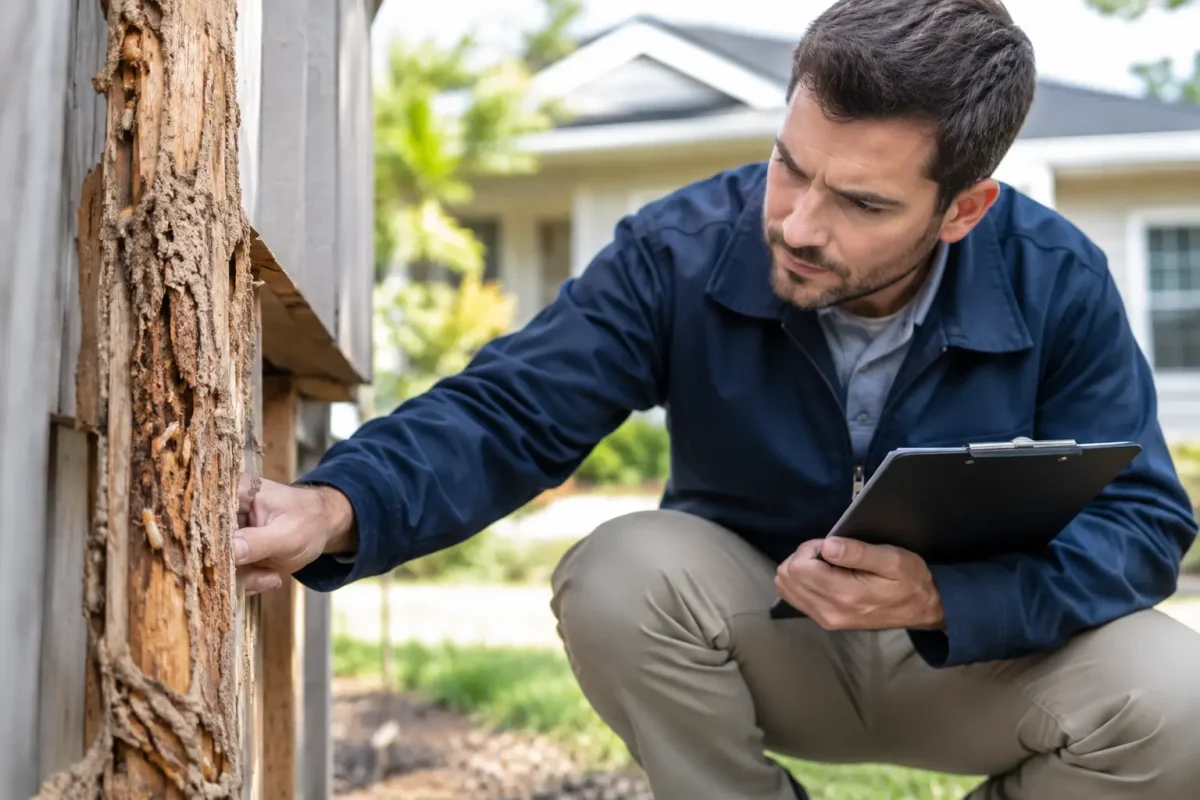
- Timber that sounds hollow when gently tapped, feels soft, or breaks away with thin internal galleries
- Bubbling paint, distorted trim, sagging floors, loose tiles, or doors and windows that suddenly bind
- Small piles of wings near windows, doors, lights, or vents after warm and humid conditions
- Damaged or damp skirting boards, architraves, cabinetry, roof timbers, deck framing, or fence connections
Each sign has other possible causes. Bubbling paint may be moisture. A sticking door can result from settlement, humidity, or poor installation. Wings may come from another insect. The risk lies in dismissing unusual signs without checking the underlying cause.
Do Not Rely on a Quick Walk-Through
An open-house visit is useful for spotting broad warning signs, but it is not a termite assessment. Furniture, stored goods, floor coverings, wall linings, insulation, landscaping, and locked areas can all restrict what is visible. A seller’s disclosure, past treatment invoice, or statement that there have been no issues should also be treated as supporting information, not proof that the property is termite-free.
Previous termite treatment can be reassuring if it is documented and maintained correctly, but it also raises questions. What type of treatment was installed? When was it completed? Was damage repaired? Is there a current management plan, monitoring record, or warranty? Chemical barriers and baiting systems require ongoing attention. Their presence is not a permanent guarantee.
The same applies to termite protection in newer construction. A physical barrier or treatment system may have been installed during construction, yet later landscaping, renovations, drilling, plumbing work, or poor drainage can compromise visibility or performance. Ask for relevant records, then have the current condition independently assessed.
When a Professional Timber Pest Inspection Is Worth It
For most buyers, a professional pre-purchase building and pest inspection is the practical next step, especially before an unconditional commitment. The inspection should assess accessible areas of the building, subfloor, roof void, external structures, site conditions, moisture concerns, and evidence of current or previous termite activity.
A thorough report should separate three issues clearly: active termite evidence, termite damage or suspected damage, and conditions that are conducive to future activity. This distinction matters. Active termites require urgent management. Old damage may still need structural assessment or repairs. Conducive conditions may be manageable, but they should influence your maintenance plan and your willingness to take on risk.
Inspection limitations should be explained plainly. No non-invasive inspection can see through every wall, below every floor finish, or behind stored belongings. Where evidence suggests concealed damage, further investigation may be recommended. That could involve a pest management professional, targeted invasive inspection with permission, plumbing investigation, or advice from a qualified builder or engineer where structural timber may be affected.
Ausgun Building Inspections combines building experience with moisture testing, thermal imaging, and non-invasive termite detection methods to help buyers understand what is visible, what is suspected, and what needs further action. The value is not simply receiving a report. It is receiving clear evidence before a costly decision becomes final.
Use the Findings to Make a Better Purchase Decision
A termite-related finding does not always mean you should walk away from a property. It depends on whether activity is current, how extensive the damage is, whether structural elements are involved, the likely repair scope, and whether you can obtain reliable treatment and repair advice before proceeding.
If active termites are found, avoid accepting vague assurances that the issue will be handled later. Seek documented treatment recommendations and clarify whether further investigation is needed to establish the full extent of damage. If prior damage is identified, ask whether repairs were completed appropriately and whether affected framing, flooring, or other structural components need assessment.
Where the report identifies conducive conditions only, factor the cost of corrective work into your decision. Improving drainage, clearing vents, moving mulch, repairing leaks, removing timber contact, and establishing regular termite inspections can substantially reduce exposure. These are often manageable works, but they should not be ignored simply because no live termites were seen on the day.
A property purchase always involves judgment under time pressure. Give termite risk the same attention you would give to cracks, water leaks, or an unsafe electrical issue. A careful inspection and a few direct questions can protect far more than the sale price – they can protect your ability to enjoy the home without inheriting a concealed repair problem.