
A Victorian owner builder defect report is not a routine formality when a recently owner-built home is being sold. It is a critical piece of evidence for buyers who need to understand whether the building work is safe, complete, and likely to create expensive repair exposure after settlement. A clean-looking property can still conceal moisture entry, roof defects, poor drainage, structural movement, incomplete waterproofing, or workmanship that does not meet a reasonable building standard.
For anyone purchasing an owner-built property in Melbourne or regional Victoria, the report should be read as part of the wider due diligence process, alongside an independent pre-purchase building and pest inspection. The two documents serve different purposes. One helps meet the seller’s legal disclosure obligations. The other gives the buyer independent advice focused on their risk.
When a Victorian Owner Builder Defect Report Is Required
Under Section 137B of the Building Act 1993, a person selling a home they built, extended, or renovated as an owner-builder may need to provide a defects report to the buyer. This generally applies where the owner-builder work was completed within the previous six years and six months.
The report is intended to disclose defects in the owner-builder work. It must be prepared by an appropriately qualified building practitioner and must be obtained within the required period before the contract of sale is signed. The seller may also need owner-builder warranty insurance where the value of the work exceeds the applicable threshold and the sale falls within the statutory period.
The exact obligations depend on the property, the type and value of work completed, when it was completed, and whether permits were required. A conveyancer or property lawyer should confirm the legal requirements for the transaction. From a buyer’s perspective, though, the practical question is simpler: does the report clearly identify the condition of the work, or does it leave too much uncertainty?
What the Report Should Assess
A properly prepared owner-builder defects report is a visual inspection of reasonably accessible areas. It considers whether there are observable defects in the owner-builder work, including workmanship issues, incomplete items, damage, and conditions that may affect the building’s performance or safety.
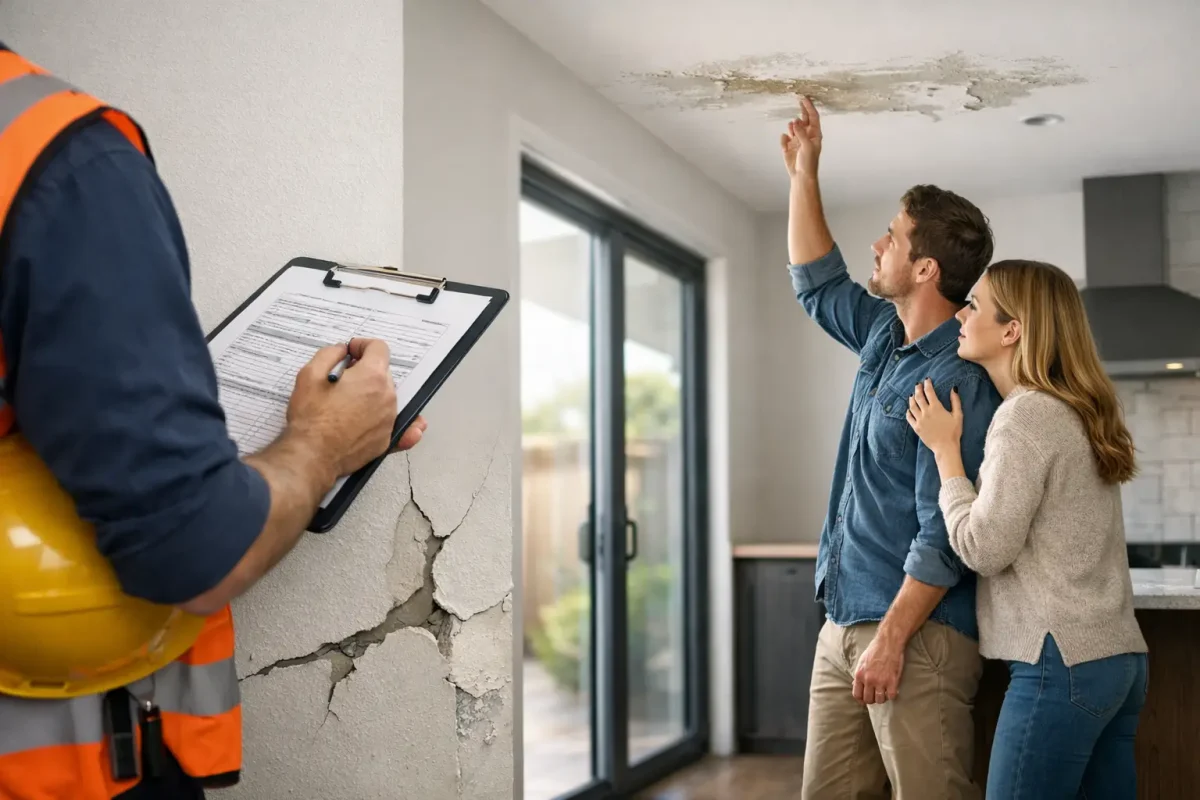
The inspection may identify visible cracking, uneven floors, poorly fitted doors and windows, roof drainage issues, defective flashings, inadequate site drainage, water staining, deteriorated sealants, defective external cladding details, or incomplete finishing. In a renovation or extension, the junction between old and new construction deserves close attention. This is where movement, leaking, incompatible materials, and incomplete weatherproofing can appear.
A report should do more than state that a defect exists. It should describe the location, the observed condition, and why it matters. Clear photographs are particularly valuable because they give buyers, sellers, agents, and advisers a common reference point. Vague wording creates room for argument. Specific evidence supports informed decisions.
What It Cannot Confirm
No visual report can see through every wall, under every floor covering, or inside concealed pipework. Access limitations matter. A locked subfloor, a roof void with restricted entry, stored belongings against walls, or dense landscaping can all prevent a full assessment of an area.
This does not make the report useless. It means the reader must understand its boundaries. Where moisture staining is visible but the source is unclear, further investigation may be needed. Where cracking suggests movement, the inspector may recommend engineering advice. Where electrical, plumbing, gas, or waterproofing concerns are suspected, specialist testing may be appropriate.
The strongest reports distinguish between what was observed, what could not be accessed, and what should happen next. That protects everyone from treating a visual inspection as a guarantee that no hidden defects exist.
Why Buyers Should Not Rely on the Seller’s Report Alone
The Section 137B report is important, but it is normally arranged by the vendor to meet a sale requirement. Buyers should still obtain their own independent building and pest inspection before committing unconditionally wherever possible.
An independent inspector works for the buyer. Their focus is not limited to owner-builder work described in the sale documents. They can assess the broader property condition, including older parts of the house, roof space, subfloor areas, moisture indicators, pest evidence, drainage, site conditions, and visible safety issues.
This distinction can be significant. A recent owner-builder extension may appear acceptable, while the original dwelling has subfloor moisture, termite damage, aging roof coverings, or movement that affects the overall investment. Conversely, a seller’s report may identify a defect without explaining its likely severity or repair implications. A buyer’s independent inspection provides a second, objective view.
At Ausgun Building Inspections, diagnostic tools such as moisture meters, thermal imaging, laser leveling, and non-invasive pest detection are used where appropriate to investigate conditions that may not be obvious during a basic walk-through. The goal is practical evidence, not unnecessary alarm.
Defects That Deserve Immediate Attention
Not every defect should end a purchase. Minor paint damage, small settlement cracks, or incomplete trim work can often be priced and repaired. The concern increases when a defect points to a wider failure in water management, structural performance, or compliance.
Water is often the most costly issue because it can damage framing, finishes, insulation, flooring, and concealed areas over time. Look closely at roof penetrations, flashings, balconies, wet areas, window openings, external cladding junctions, and the ground levels around the home. Poor falls, blocked drainage, and paving built too high against walls can direct water toward the building rather than away from it.
Structural concerns also require careful interpretation. Cracking alone does not prove a major failure, but the pattern, width, location, and surrounding movement can indicate whether further assessment is sensible. Cracks near openings, uneven floors, separation at additions, or doors that no longer close properly may warrant closer investigation.
Safety defects should not be minimized. Missing balustrades, unsafe stairs, incomplete smoke alarms, exposed wiring, defective handrails, and trip hazards can create an immediate liability as well as a repair cost. If the property will be rented, buyers should also consider how defects may affect rental minimum standards.
How to Read the Findings Before You Sign
Start with the report’s major defects and safety issues, then review the photographs and recommended actions. Ask whether the problem is isolated, whether it may worsen, and whether a specialist needs to inspect before settlement. If repairs are likely, obtain realistic quotes rather than relying on a rough estimate from the seller or agent.
The age and complexity of the owner-builder work matter. A small internal renovation with clear permits and good records presents a different risk profile from a substantial extension, second story addition, or newly built home completed by an owner-builder. Documentation can help, including building permits, occupancy permits where applicable, approved plans, certificates, invoices, warranties, and evidence of licensed trade work.
Buyers should also check that the work described in the paperwork matches what is physically present. Unapproved alterations can affect insurance, finance, future resale, and the cost of rectification. An inspection report may identify visible concerns, but it is not a substitute for reviewing permits and legal documentation.
A Report Is Evidence, Not a Verdict
An owner-built home is not automatically a poor purchase. Some are carefully planned, well documented, and completed to a high standard. Equally, a property built by a registered builder can still contain defects. The issue is not the label attached to the work. It is the evidence available to support the condition, quality, and future risk of the property.
Use the Victorian owner builder defect report to ask better questions, not to make assumptions. When its findings are clear, supported by photographs, and considered alongside an independent inspection, you are in a far stronger position to negotiate repairs, adjust your offer, seek specialist advice, or proceed with confidence. That clarity is valuable well before the contract becomes your responsibility.