A freshly painted wall, new flooring, and tidy landscaping can make a property feel ready to buy. They can also distract from the conditions that carry the greatest financial risk. Building defects are not always obvious at an open inspection, particularly when they sit behind finishes, above ceilings, below floors, or within areas a buyer cannot safely access.
For a buyer, investor, or owner approaching handover, the question is not whether a property is perfect. Very few are. The practical question is whether the defects are minor and manageable, or whether they point to water damage, movement, poor construction, safety concerns, pest activity, or expensive incomplete work. An independent inspection gives you evidence before you commit funds, waive conditions, accept a stage payment, or take possession.
What Counts as a Building Defect?
A building defect is a fault in a building’s design, materials, construction, installation, or maintenance that affects performance, safety, durability, or appearance. Some defects are cosmetic, such as uneven paint coverage or a poorly finished sealant joint. Others can affect the building’s ability to keep out water, carry loads, ventilate properly, or remain safe for occupants.
The same visible issue can have very different causes. A cracked cornice may simply result from normal seasonal movement. A crack that continues through brickwork, plaster, tiles, and external render may indicate more significant movement and needs closer assessment. This is why a useful inspection report does more than list faults. It identifies the observed condition, explains the likely risk, and helps you understand what should happen next.
In Melbourne and regional Victoria, age, soil conditions, drainage, weather exposure, renovation history, and construction quality can all influence the type of defects found. A new home is not automatically defect-free, and an older home is not automatically a poor purchase. Context matters.
The Building Defects That Deserve Immediate Attention
Some issues should move quickly to the top of your decision-making list because delays can increase repair costs or create safety risks.
Moisture intrusion and concealed leaks
Water is one of the most destructive forces in a building. It can damage timber framing, flooring, insulation, cabinetry, plaster, and electrical components. Moisture can also create conditions favorable to mold growth and termite activity.
Warning signs include staining, bubbling paint, peeling finishes, swollen skirting boards, deteriorated sealants, musty odors, corroded fixtures, and soft or uneven flooring. However, the source is not always directly above the visible stain. Water may travel along framing, pipes, roof members, or wall cavities before it appears.
A moisture meter and thermal imaging can assist in identifying areas that warrant further investigation without removing building materials. These tools do not replace a full diagnosis by a qualified trade, but they provide valuable evidence of hidden moisture patterns that an untrained eye may miss.
Cracking, settlement, and structural movement
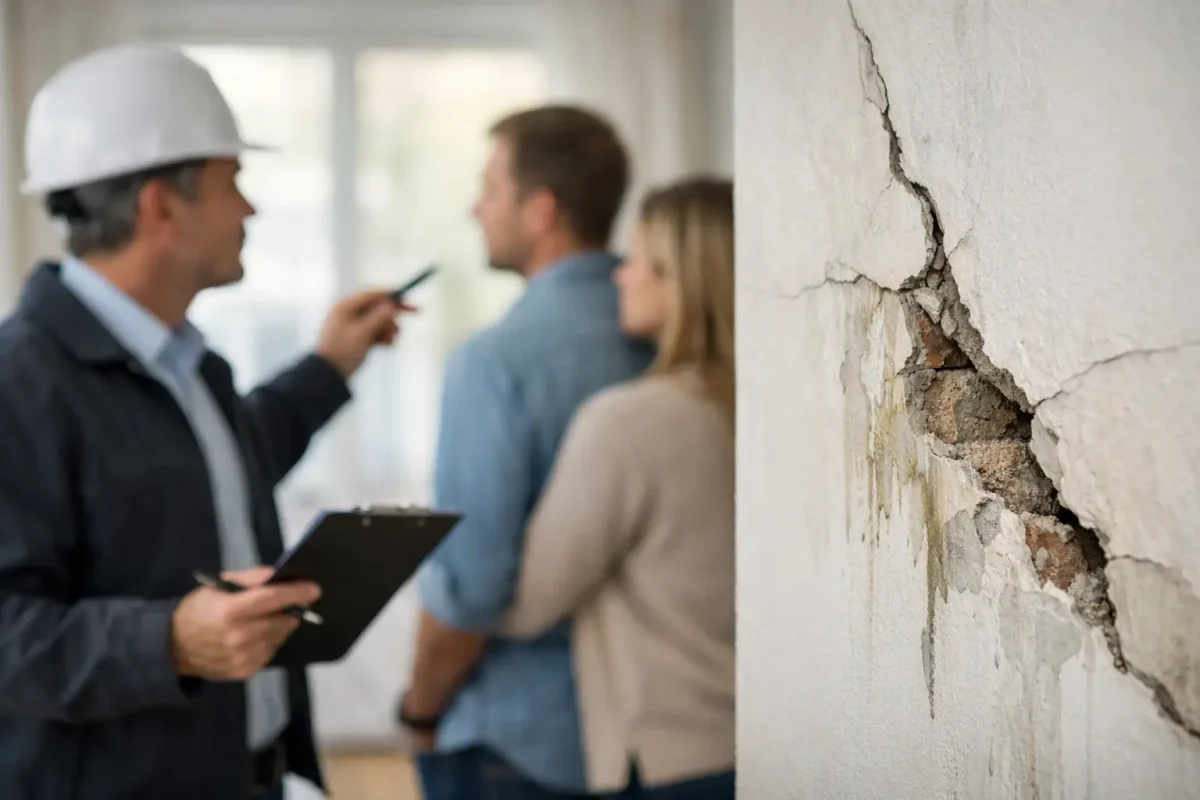
Not every crack is structural, but cracking should never be dismissed without considering its location, pattern, width, and progression. Diagonal cracks around doors and windows, stepped cracking through masonry, gaps between walls and ceilings, sloping floors, and doors that bind or fail to latch can all be relevant indicators.
Movement may relate to reactive soils, inadequate drainage, tree roots, foundation problems, poor site preparation, or changes made during renovations. In some cases, it is historic and stable. In others, it may still be active. An inspection can identify the signs and recommend whether structural engineering advice or further monitoring is appropriate before you proceed.
Roof, gutter, and drainage failures
Many expensive internal defects begin outside. Broken tiles, deteriorated flashing, blocked gutters, poor roof penetrations, disconnected downpipes, or ground levels that direct water toward the house can allow moisture into the building envelope.
Drainage is especially important around foundations. Water that ponds near the home can contribute to dampness, footing movement, and deterioration over time. A property may look dry on inspection day and still show evidence of long-term drainage problems. Look for stained eaves, overflowing-gutter marks, moss growth, eroded soil, and downpipes that discharge too close to the building.
Safety defects
Safety issues can be found in properties of any age. Examples include damaged electrical fittings, missing safety switches, loose balustrades, inadequate stair handrails, trip hazards, unsafe decks, deteriorated fencing around pools, and non-compliant smoke alarms.
These conditions matter even if the purchase price is attractive. Some repairs are straightforward, while others involve broader upgrades to meet current safety expectations. For landlords, safety and minimum standard obligations add another layer of responsibility. A rental assessment can help identify issues before a tenant, agent, or regulator raises them.
Termite damage and conditions that attract pests
Termites can cause extensive damage while leaving few obvious signs. Timber that sounds hollow, distorted door frames, bubbling paint, mud tubes, damaged skirting, or unexplained sagging may warrant investigation. Even where active termites are not found, conditions such as poor subfloor ventilation, timber-to-ground contact, leaking plumbing, or excessive moisture can increase future risk.
A pest inspection should assess both evidence of activity or damage and the conditions that make the property vulnerable. It is a different exercise from simply looking for insects during an open home.
Why New Builds Still Need Careful Inspection
A new build should meet the agreed plans, specifications, relevant standards, and acceptable workmanship requirements. Yet pre-handover inspections regularly identify incomplete work, poorly installed finishes, drainage issues, waterproofing concerns, damaged surfaces, misaligned doors and windows, roof defects, and defects concealed by the final presentation.
The most useful time to identify issues is before handover, when the builder remains responsible for completing the work. A pre-handover or PCI inspection provides a documented defects list that can be raised before final payment and possession. It does not mean every item will be major. It means you have an independent record rather than relying solely on a rushed walk-through.
Construction-stage inspections provide an earlier opportunity to identify concerns at key points, before later work conceals the area. This can be particularly valuable for slab, frame, lock-up, and fixing stages. The trade-off is that stage inspections require planning and access at the right time, but finding an issue early is generally easier and less costly than uncovering it after completion.
What an Inspection Can and Cannot Tell You
A professional building inspection is a visual, non-invasive assessment of accessible areas at the time of inspection. It can identify visible defects, signs of concealed issues, safety concerns, maintenance needs, and areas requiring further investigation. Clear photographs, descriptions, and prioritized recommendations make that information usable during negotiations or planning.
There are limits. Inspectors cannot see through every wall, lift every floor covering, move heavy furniture, predict future failures with certainty, or inspect areas that are unsafe or inaccessible. Specialized issues may require a plumber, electrician, roofer, structural engineer, geotechnical professional, or other qualified contractor.
Those limits are not a weakness when they are clearly explained. They help you understand where the evidence ends and where specialist advice should begin. A thorough inspector will not guess at a defect’s full cause when further testing is needed. They will identify the risk and point you toward the appropriate next step.
How to Use a Defects Report Before You Commit
A detailed report is most valuable when you act on it promptly. If you are purchasing, separate the findings into three practical groups: urgent safety or structural concerns, defects likely to involve meaningful repair costs, and ordinary maintenance items. This keeps a long report from feeling overwhelming and focuses attention on the issues that may affect your decision or negotiation.
Ask for quotes where the report recommends specialist assessment or repair. Do not assume that a visible defect represents the full scope of work. For example, replacing stained plaster may be inexpensive, but correcting the roof leak or plumbing failure that caused it can be more involved. Likewise, a small crack may need nothing more than monitoring, while widespread movement indicators may justify expert advice before contracts become unconditional.
For new homes, provide the documented items to the builder and keep records of responses, repairs, and any agreed completion dates. For owner-builders selling a property, a defects report required under Section 137B can provide the disclosure information purchasers need. For landlords, use identified defects to plan repairs that support safe, compliant tenancy.
Ausgun Building Inspections approaches this work with more than 17 years of construction experience, detailed reporting, and diagnostic equipment selected to reveal concerns that may not be visible during a standard walk-through. The purpose is straightforward: give clients clear evidence and plain-English guidance when property decisions carry real financial consequences.
A property does not need to be flawless to be the right purchase. It does need to be understood. Before the next contract deadline, construction payment, or handover appointment, make sure the defects you cannot see are not the ones that decide the true cost of the property.