
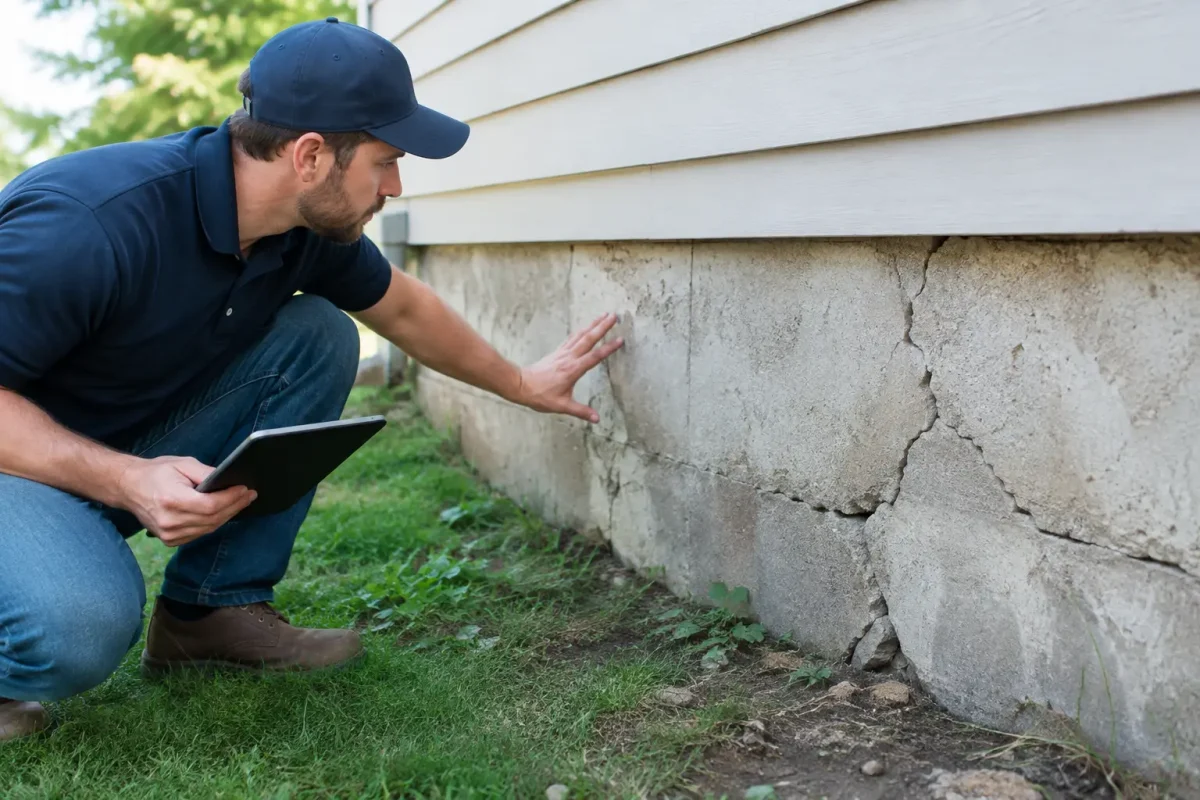
A hairline crack beside a window may be harmless paint movement. A crack that widens from one end, reappears after repair, or is paired with a sticking door deserves a closer look. Foundation warning signs are rarely judged by one symptom alone. The real concern is the pattern: movement in the structure, changes in the ground, moisture around the building, and defects that affect how the home performs.
For a buyer, these signs can change the risk behind a purchase. For an owner, catching them early can prevent a drainage issue or localized repair from becoming a much larger structural project. The right response is not panic. It is a clear, independent assessment of what is moving, why it may be moving, and what should happen next.
What Foundation Warning Signs Can Tell You
Foundations transfer the load of a building into the ground. When soil moisture changes, drainage fails, construction is incomplete, or materials deteriorate, parts of the building can move differently from one another. This is often described as differential movement or settlement.
Not all movement is active or serious. Many homes, particularly older properties, carry minor cracking from normal aging and seasonal expansion. The question is whether the evidence suggests historic movement that has stabilized, or a current condition that may continue to affect the building.
A thorough inspection considers the crack itself, but also its location, direction, width, surrounding finishes, floor levels, roofline alignment, external drainage, and visible condition of the subfloor or slab edge. That broader view protects buyers from drawing expensive conclusions from a single cosmetic defect, or overlooking a genuine warning because it appears minor.
Cracks That Need More Than a Quick Look
Cracks are the warning sign most people notice first. Fine, isolated cracks in plaster can result from minor shrinkage or ordinary wear. However, diagonal cracks running from the corners of doors or windows can indicate that one part of the wall has moved relative to another. Stair-step cracking through brickwork, separation between brick veneer and window frames, and widening mortar joints also warrant attention.
The width and condition of a crack matter. A narrow crack with old paint bridging it may be historic. A crack with fresh, exposed edges, crumbling material, visible displacement, or a gap that is wider at one end may indicate more recent movement. Repaired cracks that reopen are particularly useful evidence because they can show the underlying cause was not resolved.
Cracking in a concrete slab, garage floor, retaining wall, or exterior paving should also be assessed in context. Concrete can crack without creating a structural failure. But when cracking is combined with uneven surfaces, drainage problems, or distortion in nearby walls and openings, it may point to conditions that need further investigation.
Doors, Windows, and Floors That No Longer Sit Right
A door that occasionally sticks in humid weather is not automatically a foundation problem. Multiple doors that drag, windows that become difficult to operate, or gaps opening around frames are more concerning, especially if the changes are new.
Floors offer another practical clue. Noticeable slopes, bouncing, localized softness, or a change in level between rooms may stem from movement in stumps, joists, bearers, a slab, or the supporting ground. In raised-floor homes, poor subfloor ventilation, moisture exposure, timber decay, and inadequate support can create symptoms that resemble foundation settlement but require a different repair approach.
External clues matter too. A leaning chimney, a roofline that appears out of level, wall cladding that separates at junctions, or gaps between a porch and the main home can indicate movement between building elements. These conditions do not confirm the cause on their own, but they should not be dismissed as cosmetic before an inspector has reviewed them.
Moisture and Drainage Are Often Part of the Story
Water is one of the most common contributors to ground movement and foundation-related damage. Poorly directed downspouts, overflowing gutters, leaking plumbing, cracked stormwater drains, and paving that slopes toward the home can concentrate water around the perimeter. Over time, that water can soften supporting soils, contribute to erosion, or create repeating expansion and contraction in reactive clay soils.
On the other hand, very dry conditions can also affect some sites. Large established trees and shrubs close to a building can draw moisture from reactive soils, contributing to shrinkage beneath part of the structure. Removing a mature tree can change moisture conditions again. There is no universal safe distance that applies to every property because soil type, tree species, footing depth, and drainage all matter.
Look for ponding water near walls, damp soil against the building, efflorescence on masonry, moisture staining, peeling finishes, or musty odors below the home. These signs may indicate a moisture-management problem rather than foundation failure, but unresolved moisture can lead to broader damage. It can also create conditions favorable to timber pests, which is why a building inspection and pest assessment are often sensible together for an older or moisture-affected property.
New Homes Can Show Foundation-Related Defects Too
A new home is not automatically free of movement risk. Site preparation, drainage installation, slab construction, articulation joints, masonry workmanship, and finishing details all influence how a new building performs. Some early shrinkage cracking can occur as materials dry and settle into service. It still needs to be documented and assessed if it is extensive, recurring, or associated with uneven floors, water entry, or misaligned finishes.
For buyers approaching handover, a pre-handover inspection can identify visible defects before the final payment or acceptance. For those building in stages, construction-stage inspections provide an opportunity to review accessible work before it is covered. Timing matters because a defect behind linings, beneath flooring, or concealed by landscaping may become harder to investigate later.
When to Act Quickly
Some conditions deserve prompt professional advice rather than a watch-and-wait approach. These include rapidly widening cracks, a visibly bowing or leaning wall, a floor that suddenly drops or becomes soft, a retaining wall that shifts, persistent water entering beneath the home, or signs that a structural element is no longer adequately supported.
If you are under a purchase deadline, do not rely on a seller’s verbal explanation that cracking is “normal” or already repaired. Ask for evidence of prior repairs, engineering advice, drainage works, permits where relevant, and any history of insurance claims. Then arrange an independent inspection. A clear report gives you a factual basis for further specialist advice, repair negotiations, or a decision not to proceed.
What a Professional Inspection Adds
A capable building inspector does more than point out a crack. The inspection should assess accessible internal and external areas, look for associated movement indicators, examine drainage and moisture risks, and identify limitations where concealed elements cannot be viewed. Tools such as moisture meters, thermal imaging, and laser leveling can help identify hidden leaks, abnormal moisture patterns, and uneven floor levels without damaging finishes.
The outcome should be plain English, supported by photographs and a clear explanation of urgency. In some cases, the evidence may support monitoring and maintenance, such as improving drainage or repairing a minor defect. In others, an inspector may recommend further assessment by an appropriately qualified structural engineer, plumber, geotechnical professional, or specialist contractor. That is not an evasive answer. It is the correct next step when the cause or repair design needs expertise beyond a visual building inspection.
For Melbourne buyers and owners, soil conditions, seasonal weather, aging housing stock, and varied construction methods make local experience valuable. Ausgun Building Inspections combines building-industry knowledge with diagnostic equipment to help clients distinguish between routine maintenance and defects that could materially affect their investment.
Do not let a freshly painted wall, new flooring, or a tidy inspection day decide the question for you. When foundation warning signs appear, get clear evidence while the property decision, repair scope, or handover outcome is still in your control.