A fresh coat of paint, clean carpets, and a well-styled open house can make a property in Cranbourne feel ready to buy. They cannot tell you whether moisture is affecting a wall cavity, whether floor levels suggest movement, or whether termites have been active where you cannot see them. Building and pest inspections in Cranbourne are about getting evidence before your deposit, settlement, or handover puts the risk firmly in your hands.
For first-home buyers, investors, and owners accepting a new build, the inspection is not simply a box to tick. It is an independent assessment of the property’s visible condition, likely defects, safety concerns, and signs that further investigation or repair may be needed. The right report gives you practical facts to use in a purchase decision, price negotiation, builder discussion, or maintenance plan.
What a Building and Pest Inspection Can Reveal
A professional inspection looks beyond presentation. The inspector assesses accessible areas of the building, including the roof exterior where safely visible, roof void, interior rooms, subfloor where access allows, exterior walls, site drainage, fences, retaining elements, garages, and outbuildings that form part of the property.
The purpose is to identify major defects, minor defects, safety issues, maintenance concerns, and evidence of timber pest activity. That can include cracking associated with movement, uneven floors, deteriorated timber, incomplete flashings, poor drainage, leaking plumbing fixtures, water staining, inadequate ventilation, and workmanship that does not appear to meet an acceptable standard.
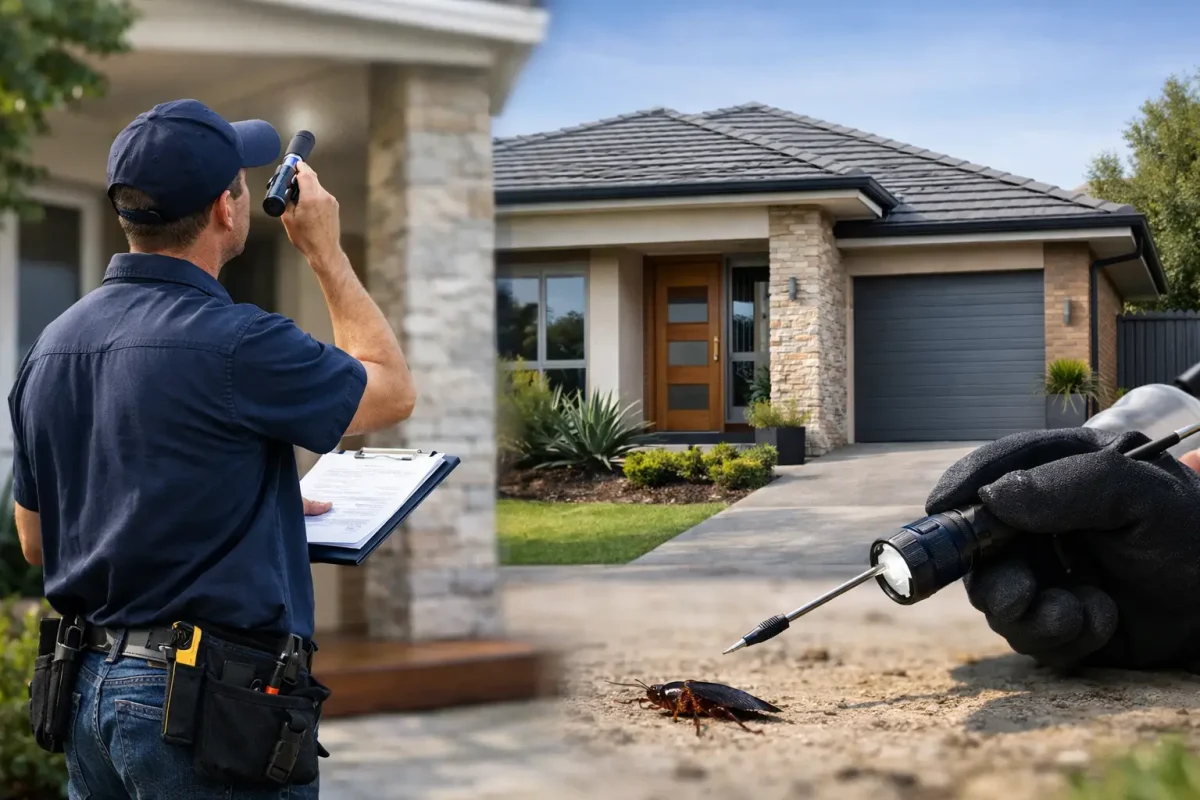
Pest inspection work is equally important in this part of Melbourne. Termites can enter through concealed paths and remain active behind linings, beneath flooring, or around damp building elements. A home can look immaculate while sustaining damage to timber framing, skirtings, door frames, or concealed structural components. Non-invasive detection equipment, moisture readings, and a careful visual assessment help identify conditions that may support termite activity or point to hidden moisture problems.
An inspection does have limits. It is generally non-invasive, which means an inspector does not cut open walls, lift fixed flooring, dismantle building elements, or move heavy furniture. Access restrictions, stored belongings, locked rooms, vegetation, and low-clearance roof or subfloor spaces can also limit what can be observed. A clear report should state those limitations rather than imply certainty where it is not possible.
Why Cranbourne Properties Need a Careful Assessment
Cranbourne includes established homes, newer estates, townhouses, investment properties, and construction projects at different stages. That mix means the defects found can vary significantly from one street to the next.
Older properties may have aging roof coverings, drainage issues, deteriorating wet-area seals, subfloor moisture, or alterations completed over several decades. Newer homes may present a different set of risks: incomplete finishes, poor falls to wet areas, cracking, roof defects, inadequate waterproofing details, or site drainage that directs water toward the building.
Neither age is a guarantee of condition. A well-maintained older home can be a better prospect than a poorly finished new build, while a recently constructed property may still have defects that should be corrected before handover. This is why a visual walkthrough by a buyer, no matter how careful, should not replace an independent inspection by someone who understands building behavior and defect patterns.
Local conditions matter as well. Water management around the home deserves close attention, particularly where paving, landscaping, downpipes, or neighboring ground levels direct water toward walls and slab edges. Persistent moisture can contribute to timber decay, mold, movement, and conditions attractive to termites. The issue is not whether a property has experienced rain – every property has – but whether water is being controlled and discharged appropriately.
When to Arrange the Inspection
For a pre-purchase inspection, arrange it as early as the contract process permits. Ideally, the contract allows sufficient time for a building and pest assessment and for you to consider the findings before the purchase becomes unconditional. Leaving the inspection until the final days can limit your ability to seek specialist advice, negotiate repairs, adjust your offer, or walk away if serious defects are identified.
A report may uncover a condition that is manageable but expensive, such as roof repairs, drainage works, extensive maintenance, or treatment for timber pests. It may also identify a defect that warrants further investigation by a structural engineer, plumber, electrician, roofing contractor, or pest treatment specialist. Those follow-up opinions can be valuable, but they take time to organize.
For new construction, inspection timing is tied to building milestones. Construction-stage inspections can identify concerns before the next payment stage or before work is concealed. A pre-handover or practical completion inspection gives the owner a documented opportunity to raise incomplete work, damage, poor finishes, and defects before accepting the home.
Do not assume the final walk-through is merely cosmetic. Doors that bind, gaps in finishes, poorly aligned elements, water ponding, unsealed penetrations, and incomplete external works may affect performance as well as appearance. Correcting them before handover is often simpler than trying to establish responsibility after occupation.
The Difference Between a Useful Report and a Generic Checklist
The value of an inspection is not measured by how many pages the report contains. It is measured by whether the findings are specific, supported by evidence, and explained in a way that helps you act.
A useful report should distinguish between urgent defects, significant concerns, and routine maintenance. It should use photographs to show what was observed and identify the location clearly. It should also explain the likely implication of an issue. For example, a moisture reading is not automatically proof of a leak, but it may justify further investigation before a buyer commits to the property.
Plain-English explanations matter because property decisions are time-sensitive and high-stakes. You need to know whether a crack appears consistent with minor movement or whether its pattern, location, and associated symptoms make it a concern. You need to know whether visible termite damage appears old or whether there are indicators of possible current activity requiring prompt treatment assessment.
At Ausgun Building Inspections, the inspection approach is grounded in more than 17 years of construction industry experience, supported by building qualifications and diagnostic tools such as moisture meters, thermal imaging, laser leveling, and non-invasive termite detection technology. The goal is not to alarm clients with a long defect list. It is to give them clear evidence, honest context, and a practical next step.
Questions to Ask Before You Book
Before engaging an inspector, ask what areas are included, whether the report covers both building defects and timber pests, and when you can expect the report. Fast delivery is helpful, but it should not come at the expense of a thorough site assessment or clear photographs.
Ask whether the inspector can explain the findings after the inspection. A report can identify the issues, but a conversation can help you understand priorities. This is especially valuable for first-home buyers who may not know the difference between normal maintenance and a defect that could affect safety, cost, or future resale.
You should also confirm qualifications, insurance, experience with the type of property being assessed, and whether advanced diagnostic equipment is used when conditions warrant it. A basic visual inspection has value, but hidden moisture, subtle floor variation, and concealed pest risk are not always obvious to the naked eye.
Be wary of anyone who promises that a property is completely defect-free. Buildings age, materials move, and even well-built homes require maintenance. The more useful promise is a careful, independent assessment of accessible areas and a report that tells you what was found, what could not be assessed, and what should happen next.
Use the Findings Before They Become Your Problem
An inspection report is most valuable when it leads to a decision. If major issues are identified before purchase, you may negotiate the price, request repairs, obtain specialist quotations, or decide the risk is not acceptable. If defects are found before a new-build handover, document them clearly and raise them with the builder while the work is still within their control.
For owners and investors, findings can also become a sensible maintenance plan. Addressing blocked drainage, deteriorated sealants, roof defects, or moisture sources early is usually less costly than waiting for damage to spread.
A property purchase should feel exciting, but it should also be evidence-based. Before you commit to a Cranbourne home or accept the keys to a new one, make room for an independent inspection that protects the investment behind the decision.